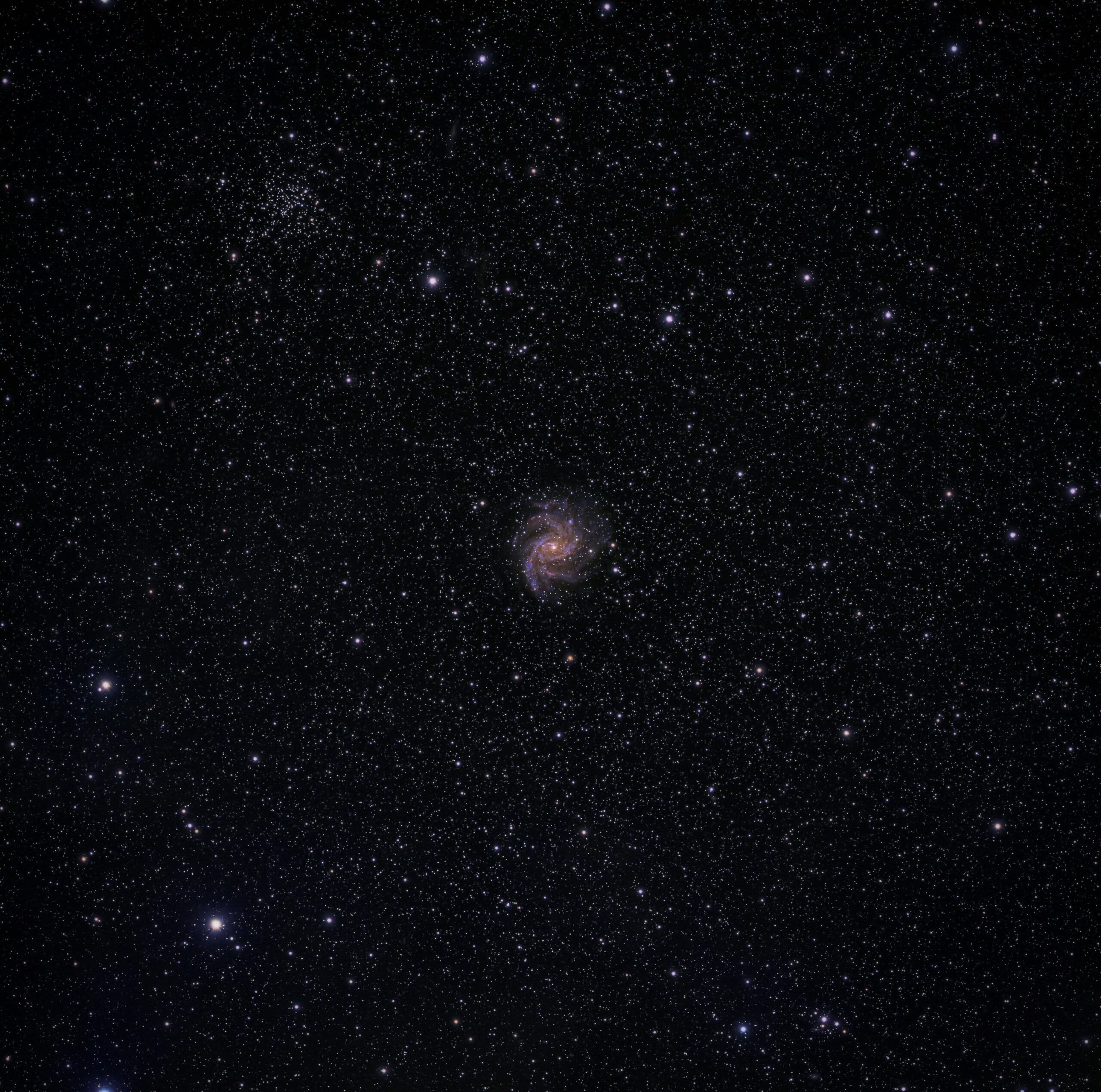
The convergence of artificial intelligence and life detection technologies is opening unprecedented frontiers in our quest to discover life beyond Earth and explore hidden ecosystems on our own planet.

Scientists, researchers, and explorers are now equipped with sophisticated AI-powered tools that can identify biosignatures, analyze complex environmental data, and make real-time decisions in the most extreme conditions. This technological revolution is transforming how we search for life, from the deepest ocean trenches to the distant moons of Jupiter and Saturn, marking a pivotal moment in human exploration history.
🚀 The Dawn of Intelligent Life Detection
Traditional methods of searching for life have relied heavily on human interpretation of data collected through various instruments and sensors. These approaches, while groundbreaking in their time, suffered from limitations including processing speed, pattern recognition capabilities, and the ability to handle massive datasets generated during exploration missions.
Artificial intelligence has fundamentally changed this paradigm. Modern AI-powered life detection systems can process terabytes of data in minutes, identify subtle patterns invisible to human observers, and adapt their search parameters based on new discoveries. Machine learning algorithms trained on extensive databases of known biological markers can now detect potential signs of life with unprecedented accuracy and speed.
The integration of neural networks, deep learning, and advanced spectroscopy has created systems capable of distinguishing between abiotic processes and genuine biosignatures. These intelligent systems don’t just collect data—they analyze, interpret, and make informed decisions about where to look next, dramatically increasing the efficiency of exploration missions.
🔬 How AI-Powered Life Detection Systems Work
At the core of these revolutionary systems lies a sophisticated combination of hardware and software working in perfect harmony. Sensors equipped with hyperspectral imaging capabilities capture data across multiple wavelengths, detecting chemical compounds and molecular structures associated with biological processes.
The AI component processes this information through multiple layers of analysis. First-level algorithms filter out noise and environmental interference. Second-level systems compare detected signatures against extensive databases of known biological and geological markers. Third-level neural networks identify novel patterns that might indicate previously unknown forms of life.
Key Technologies Driving the Revolution
Several breakthrough technologies have converged to make intelligent life detection possible. Mass spectrometry combined with machine learning can identify complex organic molecules in real-time. Computer vision algorithms analyze microscopic images to detect cellular structures or patterns consistent with biological organization.
Natural language processing enables these systems to incorporate and learn from scientific literature, continuously updating their knowledge base with the latest research findings. Reinforcement learning allows autonomous systems to optimize their search strategies based on previous successes and failures.
- Advanced spectroscopic analysis with AI interpretation
- Real-time molecular identification and classification
- Autonomous decision-making for sample collection
- Pattern recognition in complex environmental data
- Predictive modeling for optimal exploration paths
- Multi-sensor data fusion and correlation
- Adaptive learning from mission outcomes
🌊 Revolutionizing Earth-Based Exploration
While much attention focuses on extraterrestrial applications, AI-powered life detection systems are revolutionizing our understanding of life on Earth. Deep ocean exploration, once limited by human diving capabilities and processing limitations, now reaches unprecedented depths with autonomous vehicles equipped with intelligent biosensors.
These systems have discovered thriving ecosystems in hydrothermal vents, identified novel extremophile organisms in acidic lakes, and mapped biodiversity in previously inaccessible cave systems. The speed and accuracy of AI analysis means researchers can make real-time decisions during expeditions, adjusting exploration strategies based on immediate findings.
Extreme Environment Applications
Antarctica’s subglacial lakes present conditions similar to potential life-bearing environments on Europa, Jupiter’s ice-covered moon. AI-powered drilling systems equipped with sterilization protocols and intelligent biosensors are exploring these pristine ecosystems without contamination, providing valuable insights for both terrestrial and extraterrestrial life detection strategies.
In volcanic environments, automated systems analyze chemical compositions and identify thermophilic organisms that thrive in extreme heat. These discoveries expand our understanding of life’s boundaries and inform the search for similar organisms on volcanic worlds like Io or beneath the surface of Mars.
🪐 The Quest for Extraterrestrial Life
The search for life beyond Earth represents humanity’s most profound scientific endeavor, and AI-powered systems are leading this charge. NASA’s Mars rovers utilize machine learning algorithms to identify promising rock samples and detect organic compounds that might indicate past or present microbial life.
Future missions to Europa and Enceladus will rely heavily on autonomous AI systems capable of navigating subsurface oceans, detecting chemical biosignatures, and identifying locations with the highest probability of harboring life. These intelligent systems must operate independently due to communication delays, making real-time AI decision-making absolutely critical.
Mars Exploration Enhanced by Intelligence
The Perseverance rover represents a quantum leap in AI-powered exploration. Its PIXL instrument uses machine learning to analyze rock chemistry at microscopic scales, while SHERLOC identifies organic molecules and minerals that might preserve ancient biosignatures. The rover’s autonomous navigation system allows it to cover more ground and investigate more sites than any previous mission.
Future Mars missions will incorporate even more sophisticated AI capabilities, including the ability to drill into subsurface ice deposits, analyze samples for complex organic molecules, and potentially identify living organisms if they exist in protected underground environments.
📊 Data Processing and Pattern Recognition Breakthroughs
The volume of data generated by modern exploration missions exceeds human processing capabilities by orders of magnitude. A single day of rover operations on Mars can generate hundreds of gigabytes of imaging, spectroscopic, and environmental data. AI systems excel at managing this information overload.
Advanced pattern recognition algorithms can identify subtle correlations between environmental conditions and potential biosignatures that would take human researchers months or years to discover. Machine learning models trained on terrestrial ecosystems can recognize analogous patterns in alien environments, suggesting locations worthy of detailed investigation.
| Detection Method | Traditional Approach | AI-Enhanced Approach |
|---|---|---|
| Spectroscopic Analysis | Hours to days | Minutes to seconds |
| Pattern Recognition | Limited to known signatures | Identifies novel patterns |
| Sample Selection | Pre-programmed criteria | Adaptive learning-based |
| Data Processing Volume | Megabytes per analysis | Terabytes per analysis |
| Decision Making | Ground control dependent | Autonomous operation |
🧬 Biosignature Detection and Classification
Identifying genuine biosignatures among countless geological and chemical processes represents one of the greatest challenges in astrobiology. AI systems address this challenge through sophisticated classification algorithms that evaluate multiple lines of evidence simultaneously.
These systems assess morphological features, chemical composition, isotopic ratios, and spatial distribution patterns. By weighing numerous factors in combination, AI can assign confidence levels to potential biosignature detections, helping scientists prioritize which discoveries warrant detailed follow-up investigation.
False Positive Reduction Strategies
One of the most valuable contributions of AI to life detection is its ability to distinguish between abiotic processes that mimic life and genuine biological signatures. Neural networks trained on extensive datasets of both biological and geological samples can identify subtle differences that indicate true biosignatures.
This capability is crucial for avoiding the embarrassment and scientific setbacks of false positives that have occasionally plagued astrobiology. By applying rigorous statistical analysis and multiple verification methods, AI systems provide higher confidence in positive detections while flagging ambiguous results for human expert review.
🛰️ Autonomous Missions and Remote Operations
The future of exploration belongs to autonomous systems capable of making intelligent decisions without constant human supervision. Communication delays to distant worlds make real-time control impossible—a signal to Mars takes between 4 and 24 minutes one way, depending on planetary positions.
AI-powered life detection systems enable truly autonomous exploration. These systems can navigate challenging terrain, avoid hazards, identify scientifically interesting targets, and execute complex sampling procedures without waiting for instructions from Earth. This autonomy multiplies mission productivity and enables exploration of environments where communication is limited or impossible.
Swarm Intelligence for Comprehensive Coverage
Future missions may deploy multiple small, AI-coordinated vehicles that work together as a swarm. Each unit shares data and coordinates with others to achieve comprehensive area coverage. If one unit detects a promising biosignature, others can converge on that location for detailed analysis and sample collection.
This distributed intelligence approach offers redundancy, efficiency, and the ability to explore multiple sites simultaneously—capabilities impossible with single large rovers or landers.
🔭 Integration with Astronomical Observations
AI-powered life detection extends beyond surface exploration to atmospheric analysis of distant exoplanets. Machine learning algorithms process spectroscopic data from telescopes, identifying atmospheric compositions that might indicate biological activity, such as oxygen combined with methane in thermodynamic disequilibrium.
The James Webb Space Telescope and future observatories will generate massive datasets requiring AI analysis to identify potentially habitable worlds among thousands of candidates. These systems can detect subtle spectral features that might represent biosignature gases produced by alien photosynthesis or metabolism.
💡 Ethical Considerations and Planetary Protection
As we develop increasingly sophisticated life detection capabilities, we must address important ethical questions. Planetary protection protocols ensure we don’t contaminate pristine environments with Earth life, potentially destroying the very biosignatures we seek to detect.
AI systems play a crucial role in planetary protection by monitoring sterility, tracking potential contamination vectors, and ensuring exploration activities don’t compromise scientific integrity. These systems can also identify when human intervention might be necessary to prevent protocol violations.
There are also philosophical considerations about what we do if we definitively detect extraterrestrial life. AI systems that make these discoveries operate according to programmed parameters, but the implications of such findings extend far beyond science into realms of philosophy, theology, and human self-understanding.
🌟 The Road Ahead: Next-Generation Systems
Current AI-powered life detection systems represent just the beginning. Researchers are developing next-generation technologies that will push capabilities even further. Quantum computing promises to revolutionize pattern recognition and data processing speeds, enabling even more sophisticated analysis of complex biosignatures.
Neuromorphic computing systems that mimic biological neural networks may provide breakthrough capabilities in pattern recognition and adaptive learning. These systems could potentially recognize forms of life radically different from Earth’s biology, expanding our search beyond carbon-based, water-dependent organisms.
Miniaturization and Distributed Sensing
Future life detection systems will become smaller, lighter, and more energy-efficient. Microscale sensors equipped with AI processing capabilities could be deployed in vast numbers, creating comprehensive sensing networks that monitor entire planetary regions or subsurface ocean environments.
Nanotechnology integration may enable molecular-scale sensors that detect individual biomolecules or cellular components, providing unprecedented sensitivity for life detection in even the most challenging environments.
🤝 Collaboration Between AI and Human Expertise
Despite the revolutionary capabilities of AI-powered systems, human expertise remains irreplaceable. The most effective approach combines AI’s processing power and pattern recognition with human intuition, creativity, and ability to ask novel questions.
Scientists work alongside AI systems, interpreting results, designing follow-up experiments, and providing contextual understanding that machines cannot replicate. This synergy between artificial and human intelligence creates a powerful partnership that exceeds what either could achieve alone.
Training programs are evolving to prepare the next generation of astrobiologists and exploration scientists to work effectively with AI systems, understanding their capabilities and limitations while maintaining the critical thinking skills essential for scientific discovery.
🎯 Transforming Scientific Methodology
AI-powered life detection is fundamentally changing how we conduct scientific exploration. Traditional hypothesis-driven research is being augmented by AI-enabled discovery science, where systems identify unexpected patterns and correlations that suggest new hypotheses for human researchers to investigate.
This approach has already led to surprising discoveries, from unexpected extremophile habitats on Earth to novel chemical processes on Mars that might support microbial life. As these systems become more sophisticated, they will increasingly serve as partners in the scientific process rather than merely tools.
The ability to rapidly test multiple hypotheses simultaneously, analyze vast parameter spaces, and identify optimal experimental designs makes AI an invaluable accelerator for scientific progress in astrobiology and related fields.
🌍 Practical Applications Beyond Exploration
Technologies developed for AI-powered life detection in extreme environments have numerous terrestrial applications. Environmental monitoring systems use similar AI algorithms to detect pollution, track ecosystem health, and identify emerging biological threats like invasive species or disease outbreaks.
Medical diagnostics benefits from pattern recognition algorithms originally designed to identify microscopic biosignatures. These systems can detect early signs of disease, analyze complex biological samples, and suggest treatment options based on molecular profiles.
Agricultural applications include soil health monitoring, crop disease detection, and optimization of growing conditions for maximum yield—all leveraging AI technologies refined through astrobiology research.

✨ Inspiring the Next Generation of Explorers
The excitement surrounding AI-powered exploration and life detection captures imaginations worldwide, inspiring young people to pursue careers in science, technology, engineering, and mathematics. Educational programs incorporate these technologies, teaching students about both the scientific principles and the computational methods that make modern exploration possible.
Public engagement through mission updates, interactive visualizations, and citizen science projects democratizes exploration, allowing people around the world to participate in humanity’s search for life beyond Earth. This broad involvement builds support for continued investment in exploration and ensures diverse perspectives contribute to these profound questions.
As we stand at this technological threshold, AI-powered life detection systems represent more than just sophisticated instruments—they embody humanity’s enduring curiosity and our determination to answer the age-old question: Are we alone? These revolutionary tools unlock possibilities our ancestors could only imagine, bringing us closer than ever to discoveries that will fundamentally transform our understanding of life, the universe, and our place within it. The future of exploration has arrived, powered by artificial intelligence and guided by human curiosity, opening doors to revelations that await in the vast unexplored realms of our planet and beyond.