# Unveiling Alien Landscapes: Exploring the Dynamic Geological Wonders of Mars and Venus

Beyond Earth’s familiar horizons lie two worlds that challenge our understanding of planetary geology. Mars and Venus stand as monuments to nature’s creative power, showcasing landscapes sculpted by forces both alien and awe-inspiring.
These neighboring planets have captivated scientists and enthusiasts alike, offering windows into geological processes that dwarf anything experienced on our home world. From towering volcanoes to vast canyon systems, Mars and Venus present geological theaters where planetary evolution plays out in spectacular fashion, revealing secrets about our solar system’s turbulent past and dynamic present.
🔴 The Crimson Desert: Understanding Mars’ Geological Canvas
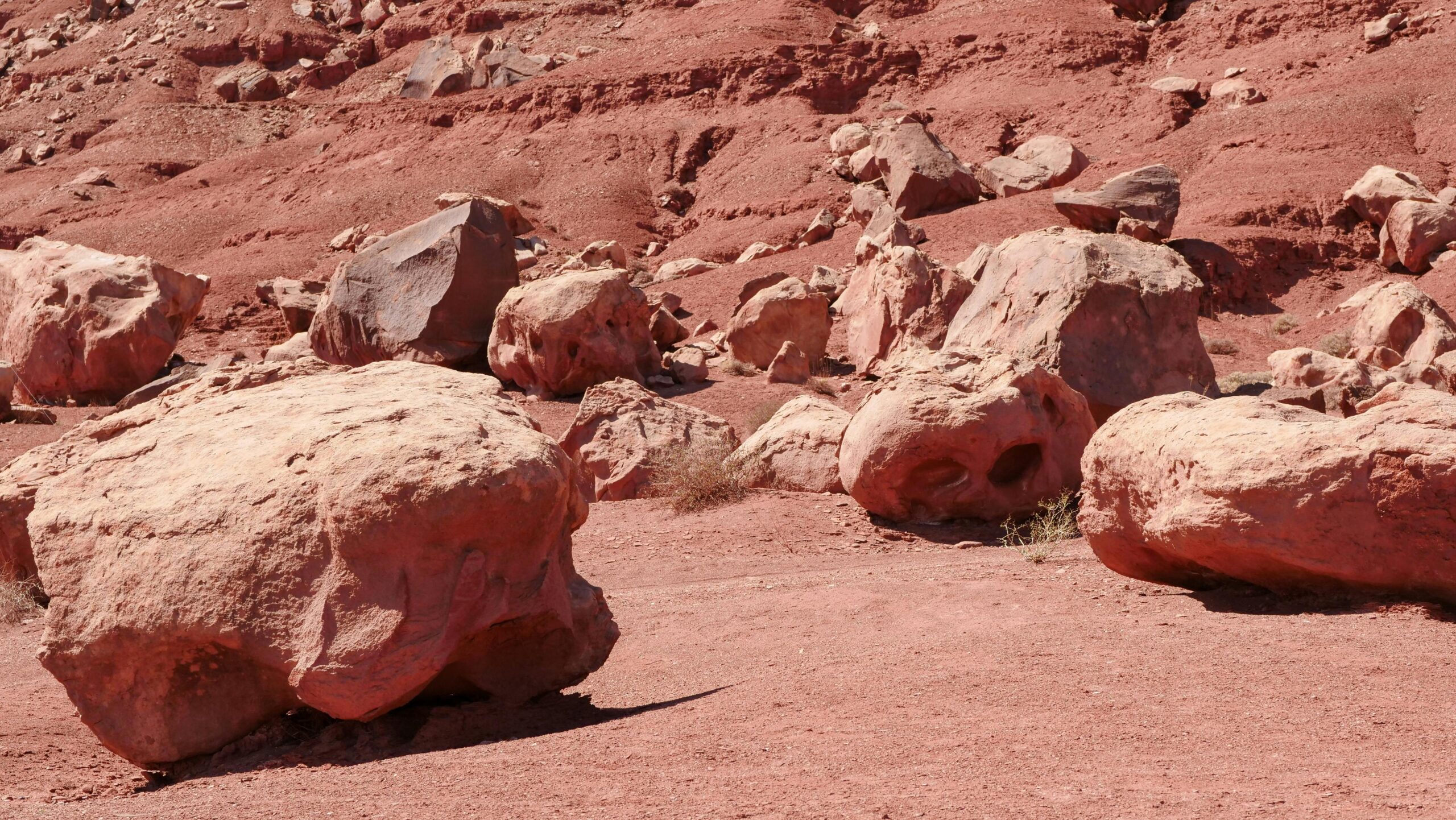
Mars, the fourth planet from our sun, presents a landscape frozen in geological time yet rich with evidence of dramatic transformation. The rusty-red surface that gives Mars its distinctive appearance results from iron oxide covering much of the planet’s exterior, creating a world that appears simultaneously barren and beautiful.
The Martian surface reveals a complex history spanning billions of years. Ancient river valleys carved into crater-pocked highlands tell stories of water flowing freely across the surface. Meanwhile, younger volcanic plains in the northern hemisphere suggest a planet with distinct geological periods, each leaving indelible marks on the landscape.
Current missions continue to uncover evidence that Mars once hosted conditions far more hospitable than today’s frozen desert. Understanding these geological wonders helps scientists piece together not just Martian history, but the broader story of terrestrial planet formation and evolution throughout our cosmic neighborhood.
🌋 Olympus Mons: The Solar System’s Mightiest Volcano
Rising approximately 21 kilometers above Mars’ mean surface level, Olympus Mons dominates the Martian landscape as the largest known volcano in our solar system. This shield volcano spans roughly 600 kilometers in diameter, covering an area comparable to the entire state of Arizona.
The volcano’s gentle slopes, typically averaging only five degrees, belie its massive scale. Unlike Earth’s volcanoes, which form over moving tectonic plates creating volcanic island chains, Olympus Mons grew from a single hotspot remaining stationary for millions of years. This allowed volcanic material to accumulate continuously, building the mountain to its extraordinary height.
The caldera complex at Olympus Mons’ summit contains six overlapping collapse craters, indicating multiple phases of volcanic activity. These features provide crucial insights into Mars’ volcanic history and the planet’s thermal evolution. Scientists believe the volcano may have been active as recently as two million years ago, making it geologically young despite Mars’ current volcanic dormancy.
Comparing Terrestrial and Martian Volcanism
Several factors enabled Martian volcanoes to grow far larger than their terrestrial counterparts. Mars’ lower gravity, approximately 38% of Earth’s, allows volcanic structures to support greater mass without collapsing. Additionally, the absence of plate tectonics means volcanic hotspots remain stationary, permitting continuous growth at single locations rather than creating volcanic chains.
The lower atmospheric pressure on Mars also affects volcanic eruptions differently than on Earth. Lava flows can travel greater distances before cooling and solidifying, contributing to the broad, gently sloping profiles characteristic of Martian shield volcanoes.
⚡ Valles Marineris: The Grand Canyon’s Titanic Cousin
Stretching approximately 4,000 kilometers long, 200 kilometers wide, and reaching depths of 7 kilometers, Valles Marineris represents one of Mars’ most spectacular geological features. This massive canyon system extends nearly a quarter of the planet’s circumference, dwarfing Earth’s Grand Canyon by comparison.
The canyon’s origin remains partially debated among planetary scientists. The leading theory suggests Valles Marineris formed through a combination of tectonic cracking as the Tharsis volcanic region uplifted and subsequent erosion by various processes including water, wind, and landslides.
Within Valles Marineris, layered sedimentary deposits visible in canyon walls provide evidence of Mars’ complex geological history. These layers may contain minerals formed in water-rich environments, making them prime targets for future exploration missions seeking evidence of past Martian life.
Erosional Forces Shaping the Martian Surface
Despite Mars’ thin atmosphere, wind erosion continues shaping the planet’s surface today. Dust devils, similar to those on Earth but sometimes larger, transport fine particles across vast distances. Seasonal carbon dioxide ice sublimation also contributes to surface modification, creating unique features like spider-like patterns in polar regions.
Evidence of ancient water erosion appears throughout Mars, particularly in the heavily cratered southern highlands. Networks of valley systems suggest rainfall or groundwater seepage carved channels billions of years ago when Mars possessed a thicker atmosphere and warmer climate.
💧 The Mystery of Martian Water: Past and Present
Perhaps no aspect of Martian geology generates more excitement than evidence of past and present water. Ancient shorelines, deltas, and alluvial fans scattered across the surface indicate Mars once hosted substantial bodies of liquid water, potentially including oceans, lakes, and rivers.
Today, water exists on Mars primarily as ice in polar caps and buried deposits. However, seasonal dark streaks called recurring slope lineae suggest briny liquid water might flow temporarily on sun-facing slopes during warmer periods. These features represent some of the most intriguing targets for astrobiology research.
The Mars Reconnaissance Orbiter and other spacecraft have detected extensive subsurface ice deposits at mid-latitudes, sometimes beginning just centimeters below the surface. These water ice reserves could prove invaluable for future human exploration, providing essential resources for life support and fuel production.
🔥 Venus: Earth’s Hellish Twin
While Mars presents a cold desert world, Venus offers the opposite extreme. Often called Earth’s twin due to similar size and mass, Venus diverged dramatically in its geological evolution, becoming a pressure-cooker world with surface temperatures reaching 465°C and atmospheric pressure 92 times that of Earth.
Venus’ thick atmosphere, composed primarily of carbon dioxide with clouds of sulfuric acid, creates a runaway greenhouse effect that maintains hellish surface conditions. This dense atmosphere also makes surface observation extremely challenging, with most Venusian geological knowledge coming from radar mapping by orbiting spacecraft and brief data from Soviet Venera landers.
Despite the hostile environment, Venus exhibits geological activity that may continue to the present day. The planet’s surface appears relatively young, perhaps only 300-600 million years old, suggesting catastrophic resurfacing events or ongoing volcanic processes maintain geological youth.
🌪️ Volcanic Domination: Venus’ Eruptive Landscape
Volcanic features dominate Venus’ landscape more thoroughly than any other terrestrial planet. Scientists have identified over 1,600 major volcanoes and volcanic features across the Venusian surface, with potentially hundreds of thousands of smaller volcanic structures remaining uncatalogued.
Venusian volcanoes display remarkable diversity, from massive shield volcanoes rivaling Olympus Mons to unique features called pancake domes and coronae found nowhere else in the solar system. These structures provide clues about Venus’ interior heat flow and geological processes operating under extreme surface conditions.
Pancake Domes and Coronae: Unique Venusian Features
Pancake domes represent one of Venus’ most distinctive volcanic features. These circular, flat-topped structures, typically 25 kilometers in diameter and one kilometer high, form from highly viscous lava erupting onto the surface. Their unique appearance results from Venus’ high surface temperature keeping lava fluid longer than on other worlds.
Coronae, large circular to oval features ranging from 150 to 1,000 kilometers across, appear to form from mantle upwelling. These features, surrounded by concentric ridges and grooves, may indicate active or recently active geological processes. Some coronae show evidence of volcanic activity, fracturing, and surface deformation.
🗻 Maxwell Montes: Scaling Venus’ Highest Peak
Maxwell Montes stands as Venus’ highest mountain, rising approximately 11 kilometers above the planet’s mean surface level. Located in Ishtar Terra, one of Venus’ two continental-scale highland regions, Maxwell Montes presents scientists with intriguing questions about Venusian mountain-building processes.
Unlike Earth’s highest peaks, which form primarily through plate tectonics, Maxwell Montes may result from different geological mechanisms. Theories include mantle upwelling, compression from horizontal crustal movements, or volcanic construction. The mountain’s exact formation process remains debated due to limited high-resolution surface data.
Radar observations reveal Maxwell Montes’ slopes covered with highly reflective material, possibly metallic compounds or minerals that precipitate from the atmosphere at higher, cooler elevations. This unusual coating adds another layer of mystery to Venus’ complex geology.
⚡ Tesserae: Ancient Crustal Fragments
Tesserae represent some of Venus’ oldest and most deformed terrain. These heavily fractured and ridged regions cover approximately 8% of the planet’s surface and may preserve evidence of Venus’ earliest geological history. The complex deformation patterns suggest multiple episodes of tectonic activity compressed and stretched these crustal blocks.
Understanding tesserae formation could reveal whether Venus once had plate tectonics similar to Earth. Some scientists propose these ancient crustal fragments formed during an early tectonic period before Venus’ evolution diverged from Earth’s geological path.
🔬 Comparative Planetology: Lessons from Two Worlds
Studying Mars and Venus together provides invaluable insights into planetary evolution and the factors determining habitability. Both planets began with conditions potentially suitable for life, yet followed dramatically different evolutionary paths leading to their current extreme states.
| Feature | Mars | Venus |
|---|---|---|
| Surface Temperature | -63°C average | 465°C average |
| Atmospheric Pressure | 0.6% of Earth | 92 times Earth |
| Volcanic Activity | Dormant (possibly) | Potentially active |
| Surface Water | Frozen ice deposits | None detected |
| Largest Volcano | Olympus Mons (21 km) | Maat Mons (8 km) |
These contrasts highlight how planetary mass, distance from the sun, and atmospheric evolution profoundly influence geological outcomes. Mars lost its magnetic field early in its history, allowing solar wind to strip away much of its atmosphere. Venus retained its atmosphere but developed a runaway greenhouse effect that transformed it into an inhospitable furnace.
🛰️ Modern Exploration and Future Missions
Current and planned missions continue expanding our understanding of Martian and Venusian geology. NASA’s Perseverance rover explores Jezero Crater, an ancient lake bed on Mars, while the Ingenuity helicopter demonstrates aerial exploration capabilities that could revolutionize future missions.
For Venus, NASA recently selected the VERITAS and DAVINCI+ missions for future launch, while ESA plans the EnVision orbiter. These missions will provide unprecedented high-resolution mapping of Venusian geology and atmospheric chemistry, potentially detecting active volcanism and revealing detailed surface composition.
Future Mars missions may include sample return capabilities, bringing Martian rocks to Earth for detailed laboratory analysis. Such samples could definitively answer questions about past Martian life and provide crucial data for planning human exploration.
The Search for Active Geology
Detecting current geological activity on both worlds remains a high priority. On Mars, scientists search for evidence of recent volcanic eruptions, ongoing groundwater movement, and seasonal surface changes. Seismic monitoring by NASA’s InSight lander has revealed Mars experiences frequent marsquakes, indicating ongoing internal geological processes.
Venus presents greater challenges for detecting active processes due to its hostile surface environment. However, variations in atmospheric sulfur dioxide levels detected by different missions suggest possible ongoing volcanic activity. Future missions equipped with advanced radar and infrared sensors may finally confirm whether Venus remains geologically active today.
🌍 Implications for Earth and Planetary Science
Understanding Martian and Venusian geology extends beyond mere curiosity about our neighbors. These worlds serve as natural laboratories where we observe planetary processes under different conditions, helping us understand Earth’s geological history and potential future.
Venus demonstrates how greenhouse gas accumulation can transform a potentially habitable world into an extreme environment, providing sobering context for Earth’s climate challenges. Mars shows what happens when a planet loses its magnetic field and much of its atmosphere, highlighting the importance of factors protecting Earth’s habitability.
Comparative planetology also informs the search for habitable exoplanets orbiting distant stars. By understanding how terrestrial planets evolve under various conditions, scientists can better identify which extrasolar worlds might support life and which factors prove most critical for maintaining habitable conditions over geological timescales.
🚀 Human Exploration: Walking on Alien Ground
Mars remains the prime target for future human exploration beyond the Moon. Its geological features offer both challenges and opportunities for astronaut explorers. Ancient water-carved valleys, volcanic formations, and subsurface ice deposits all represent targets for detailed investigation impossible through robotic missions alone.
Human geologists on Mars could accomplish in hours what rovers require weeks to achieve, selecting samples strategically and adapting exploration plans based on field observations. The geological knowledge gained would revolutionize our understanding of planetary evolution and potentially reveal evidence of past life preserved in Martian rocks.
Venus presents far greater challenges for human exploration due to extreme surface conditions. However, some scientists propose high-altitude balloon missions in Venus’ upper atmosphere, where temperatures and pressures more closely approximate Earth-like conditions. From these floating platforms, researchers could study Venusian geology through advanced remote sensing while remaining above the hostile surface.
🔭 Unlocking Planetary Mysteries Through Geological Investigation
The dynamic geological landscapes of Mars and Venus continue revealing secrets about planetary formation, evolution, and the factors governing habitability. Each mission brings new discoveries that reshape our understanding of these alien worlds and our place in the cosmic neighborhood.
From Olympus Mons’ towering slopes to Venus’ scorching volcanic plains, from Valles Marineris’ immense depths to ancient Martian riverbeds, these geological wonders represent chapters in the solar system’s ongoing story. As exploration technologies advance and new missions venture forth, humanity’s knowledge of these fascinating worlds will deepen, potentially revealing answers to fundamental questions about life’s potential beyond Earth.
The geological exploration of Mars and Venus stands as one of humanity’s greatest scientific endeavors, combining cutting-edge technology, theoretical understanding, and the timeless human drive to explore unknown frontiers. These alien landscapes, though separated from us by millions of kilometers of space, connect us to the broader cosmic processes that shaped our own world and continue transforming planets throughout the universe. 🌌