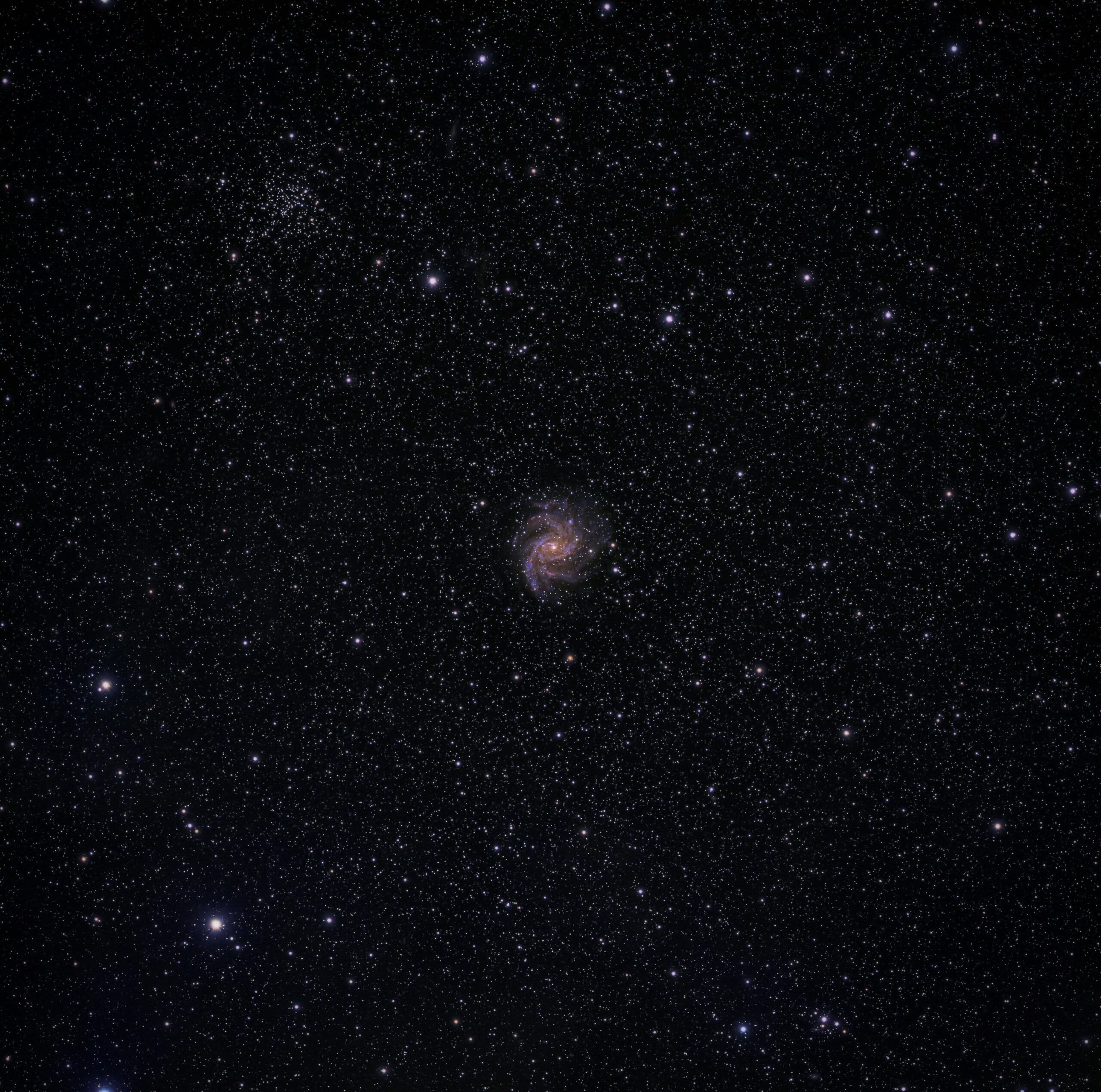
The cosmic ballet between our Sun and the planets unfolds in a spectacular display of magnetic forces and charged particles. This invisible dance shapes the very nature of space weather and planetary protection.

Throughout our solar system, an intricate web of magnetic fields and solar radiation creates dynamic environments that scientists continue to study with fascination. Understanding these interactions reveals fundamental truths about planetary habitability, space exploration challenges, and the remarkable protective mechanisms that shield worlds from stellar bombardment. The magnetosphere acts as an invisible guardian, deflecting harmful solar particles and creating some of nature’s most breathtaking phenomena.
🌟 The Solar Wind: A Stellar Breath Across Space
The Sun constantly releases a stream of charged particles known as solar wind, consisting primarily of electrons, protons, and alpha particles. This plasma flows outward from our star at speeds ranging from 300 to 800 kilometers per second, carrying the Sun’s magnetic field throughout the heliosphere. The solar wind isn’t uniform; it varies in density, temperature, and velocity depending on solar activity and the region of the Sun from which it originates.
During periods of intense solar activity, coronal mass ejections can release billions of tons of plasma into space within hours. These massive eruptions travel faster than typical solar wind, creating shock waves that compress and accelerate the ambient solar wind ahead of them. The variable nature of solar wind creates constantly changing conditions throughout our solar system, affecting every planet, moon, and spacecraft in its path.
The Magnetosphere: Planetary Force Fields
A magnetosphere represents the region around a planet where its magnetic field dominates over the solar wind. This protective bubble deflects charged particles from the solar wind, preventing them from directly striking the planetary surface or atmosphere. The size and shape of a magnetosphere depend on several factors: the strength of the planet’s magnetic field, the density and speed of the solar wind, and the planet’s distance from the Sun.
Earth’s magnetosphere extends approximately 65,000 kilometers toward the Sun and stretches millions of kilometers in the opposite direction, forming a comet-like tail. This asymmetric shape results from the constant pressure of solar wind compressing the sunward side while stretching the night side into an elongated magnetotail. Within this magnetic cocoon, complex processes govern the flow of energy and particles.
Magnetic Field Generation: The Dynamo Effect
Planetary magnetic fields arise through the dynamo effect, a process requiring three essential ingredients: an electrically conductive fluid, convection or rotation to move that fluid, and an initial magnetic field to amplify. Earth generates its magnetic field through convection currents in its liquid outer core, composed primarily of molten iron and nickel. The planet’s rotation organizes these flows into patterns that sustain and regenerate the magnetic field.
Not all planets possess strong magnetic fields. Mercury has a weak global field, Venus and Mars lack significant magnetospheres despite having had them in the past, while the gas giants Jupiter and Saturn boast the most powerful magnetic fields in our solar system. These differences profoundly affect how each planet interacts with the solar wind and how their atmospheres evolve over geological timescales.
⚡ The Collision Zone: Bow Shock and Magnetopause
When the supersonic solar wind encounters a planetary magnetosphere, it cannot penetrate immediately. Instead, it forms a bow shock wave upstream of the magnetosphere, similar to the wake created by a boat moving through water. At this boundary, the solar wind abruptly slows from supersonic to subsonic speeds, becoming heated and compressed in the process.
Beyond the bow shock lies a turbulent region called the magnetosheath, where shocked solar wind flows around the magnetosphere. The innermost boundary, the magnetopause, marks where the pressure from the planet’s magnetic field balances the dynamic pressure of the solar wind. This boundary constantly fluctuates, breathing in and out as solar wind conditions change, sometimes by thousands of kilometers within minutes during intense space weather events.
Magnetic Reconnection: The Energy Gateway
One of the most important processes occurring at the magnetopause is magnetic reconnection. When the interplanetary magnetic field carried by the solar wind aligns antiparallel to the planet’s magnetic field, the field lines can break and reconnect in a new configuration. This process explosively converts magnetic energy into kinetic energy, accelerating particles to high velocities and allowing solar wind plasma to enter the magnetosphere.
Reconnection serves as the primary mechanism by which energy and momentum from the solar wind transfer into planetary magnetospheres. During geomagnetic storms, enhanced reconnection drives powerful currents through the magnetosphere, energizes radiation belt particles, and can trigger spectacular auroral displays visible at lower latitudes than normal.
🎨 Aurora: Nature’s Light Show
Among the most visible manifestations of magnetosphere-solar wind interaction are auroras—dancing curtains of light that grace the polar skies of magnetized planets. These luminous displays occur when charged particles from the magnetosphere precipitate into the upper atmosphere, colliding with atmospheric gases and causing them to emit light at characteristic wavelengths.
On Earth, oxygen produces green and red auroral emissions, while nitrogen contributes blue and purple hues. The altitude of particle precipitation determines which colors dominate. Green auroras typically occur between 100 and 300 kilometers altitude, while rare red auroras can extend above 300 kilometers where oxygen is less dense but still present.
Auroral Ovals and Substorms
Auroras don’t randomly appear across polar regions but concentrate in oval-shaped zones centered around the magnetic poles. These auroral ovals expand and intensify during geomagnetic substorms—episodic energy release events lasting one to three hours. During a substorm, energy stored in the magnetotail suddenly releases, accelerating particles earthward and creating brilliant, rapidly moving auroral displays.
Jupiter’s auroras dwarf Earth’s in both size and power, with auroral ovals larger than our entire planet. The giant planet’s rapid rotation and powerful magnetic field create permanent auroral features, enhanced by electromagnetic interactions with its volcanically active moon Io, which injects tons of material into Jupiter’s magnetosphere every second.
Comparative Magnetospheres: A Solar System Tour
Each magnetosphere in our solar system tells a unique story of planetary magnetic fields interacting with solar wind. These variations provide natural laboratories for understanding fundamental plasma physics processes under different conditions.
Mercury: The Miniature Magnetosphere
Mercury possesses the smallest magnetosphere in our solar system, extending only about 1.5 planetary radii from its surface. Despite this modest size, Mercury’s magnetosphere exhibits many features found in Earth’s system, including a bow shock, magnetopause, and magnetotail. The planet’s proximity to the Sun means it experiences solar wind conditions 10 times more intense than Earth, creating extreme space weather even around this weak magnetic field.
NASA’s MESSENGER mission revealed that Mercury experiences rapid magnetic reconnection events and that solar wind ions can directly impact the planet’s surface, contributing to its tenuous exosphere through sputtering processes.
Venus and Mars: The Unprotected Worlds
Venus and Mars lack global magnetic fields, leaving their atmospheres directly exposed to solar wind. Without magnetospheric protection, the solar wind interacts directly with their upper atmospheres, creating induced magnetospheres where electric currents in the ionosphere generate weak magnetic fields that partially deflect the solar wind.
This direct exposure has profound consequences. Mars has lost most of its atmosphere over billions of years, with solar wind stripping being a major culprit. The MAVEN spacecraft has directly measured atmospheric loss rates, showing that Mars loses approximately 100 grams of atmosphere to space every second, a rate that increases during solar storms.
The Gas Giants: Magnetospheric Monsters
Jupiter’s magnetosphere represents the largest structure in the solar system, extending over 7 million kilometers toward the Sun and stretching beyond Saturn’s orbit in the opposite direction. If visible to the naked eye, Jupiter’s magnetosphere would appear several times larger than the full Moon in Earth’s sky. This immense magnetic bubble rotates with the planet’s rapid 10-hour spin, creating powerful electric fields and trapping intense radiation belts.
Saturn’s magnetosphere, while smaller than Jupiter’s, exhibits unique characteristics due to interactions with its extensive ring system and numerous moons. The moon Enceladus, with its water geysers, provides a significant source of neutral particles that become ionized and populate Saturn’s magnetosphere, creating a vast neutral cloud and affecting magnetospheric dynamics.
🛰️ Space Weather: Practical Implications
Understanding magnetosphere-solar wind interactions extends beyond academic interest. Space weather affects satellite operations, communication systems, power grids, and human space exploration. Intense geomagnetic storms can induce currents in power transmission lines, potentially causing widespread blackouts, as occurred in Quebec in 1989 when a major storm collapsed the entire power grid.
Satellites face multiple threats during space weather events. Enhanced radiation can damage electronic components, increased atmospheric drag at low Earth orbit altitudes can alter trajectories, and surface charging from energetic particles can trigger spurious commands or permanent damage. GPS accuracy degrades during geomagnetic storms due to ionospheric disturbances, affecting navigation systems worldwide.
Protecting Human Explorers
As humanity plans missions beyond Earth’s protective magnetosphere, understanding space radiation environments becomes critical. Astronauts on the Moon or traveling to Mars will experience radiation exposure far exceeding what space station crews encounter within Earth’s magnetic protection. Major solar particle events can deliver dangerous radiation doses within hours, necessitating radiation shelters and sophisticated forecasting systems.
Future Mars colonists will face chronic exposure to both solar energetic particles and galactic cosmic rays. Designing adequate shielding while maintaining reasonable mass budgets represents one of the major engineering challenges for long-duration space missions beyond Earth’s magnetosphere.
Cutting-Edge Research and Future Exploration
Modern magnetospheric research employs multi-spacecraft missions that provide simultaneous observations at different locations. NASA’s Magnetospheric Multiscale (MMS) mission uses four identical spacecraft flying in tight formation to study magnetic reconnection at unprecedented scales. The mission has revealed that reconnection occurs much faster than previously thought possible and involves complex three-dimensional structures.
The European Space Agency’s upcoming SMILE mission will study solar wind-magnetosphere coupling using simultaneous imaging and in-situ measurements. By watching the entire magnetosphere respond to solar wind changes while measuring conditions locally, scientists hope to understand energy transfer processes more completely.
Exoplanetary Magnetospheres
Research into planetary magnetospheres now extends beyond our solar system. Radio observations have detected emission from hot Jupiters—gas giant exoplanets orbiting extremely close to their host stars. These planets experience stellar wind conditions millions of times more intense than Jupiter experiences from our Sun, creating extreme magnetospheric environments that may be observable across interstellar distances.
Understanding exoplanetary magnetospheres helps assess habitability. A strong magnetic field may be essential for maintaining atmospheres on planets orbiting active stars, making magnetospheric strength a factor in identifying potentially habitable worlds.
The Interconnected System: From Sun to Surface
The Sun-magnetosphere-ionosphere-atmosphere system operates as a complex, interconnected whole. Changes in solar wind conditions ripple through the entire system within minutes to hours, affecting regions from hundreds of thousands of kilometers in space down to Earth’s surface. Energy and momentum flow through multiple coupling mechanisms: magnetic reconnection at the magnetopause, particle precipitation into the ionosphere, electric field penetration to low latitudes, and thermospheric heating that affects satellite drag.
This coupling works both ways. Atmospheric conditions can influence ionospheric conductivity, which affects how electric currents flow and how the magnetosphere responds to solar wind driving. Seasonal variations, day-night differences, and even terrestrial weather can modulate space weather effects, creating a truly integrated Earth system that spans from ground level to the edges of space.
🔭 Observational Techniques and Technologies
Studying invisible magnetic fields and particle populations requires sophisticated instrumentation. Magnetometers measure magnetic field strength and direction with extreme precision, detecting variations of less than one nanotesla. Particle detectors count and characterize electrons, protons, and ions across wide energy ranges, from thermal energies to highly relativistic particles.
Ground-based observatories complement space missions. Networks of magnetometers, radars, and optical instruments monitor geomagnetic activity, ionospheric conditions, and auroral displays continuously. All-sky cameras capture auroral dynamics, while incoherent scatter radars probe ionospheric density, temperature, and velocity profiles. These coordinated observations provide comprehensive views of magnetospheric dynamics impossible from any single vantage point.
Looking Forward: Unanswered Questions
Despite decades of research, fundamental questions remain. How exactly does energy partition during magnetic reconnection? What triggers the onset of magnetospheric substorms? How do radiation belts respond to different types of solar wind structures? Can we predict space weather with the accuracy needed to protect critical infrastructure?
Answering these questions requires continued investment in space missions, ground-based facilities, and computational modeling. As our technological civilization becomes increasingly dependent on space-based assets and we venture beyond Earth’s protective embrace, understanding the cosmic dance between magnetospheres and solar wind transitions from scientific curiosity to practical necessity.
The interplay between planetary magnetospheres and solar winds represents one of nature’s grandest performances—an invisible ballet that shapes planetary environments, creates spectacular visual displays, and fundamentally influences the evolution of atmospheres and the potential for life. By studying these dynamic interactions throughout our solar system and beyond, we gain not only scientific knowledge but also the practical wisdom needed to navigate an increasingly space-dependent future. This cosmic dance continues moment by moment, a reminder that we live within an active, dynamic solar system where the Sun’s influence reaches across vast distances to touch every world, including our own. 🌍