
The prospect of transforming barren planets into habitable worlds has shifted from science fiction fantasy to serious scientific discourse. As humanity stands on the threshold of becoming a multi-planetary species, we face profound questions about our right to reshape entire worlds and the ethical implications of such cosmic-scale engineering.

Terraforming represents one of the most ambitious undertakings our species could attempt—fundamentally altering planetary atmospheres, temperatures, and ecosystems to support human life. This vision raises complex moral questions about environmental responsibility, the sanctity of alien landscapes, and humanity’s role as cosmic gardeners or cosmic colonizers.
🌍 The Terraforming Vision: From Dream to Potential Reality
Terraforming, derived from the Latin “terra” meaning Earth, refers to the hypothetical process of deliberately modifying a planet’s atmosphere, temperature, surface topography, or ecology to make it habitable for terrestrial life. Mars stands as the primary candidate in contemporary discussions, with its proximity, similar day length, and evidence of past water making it theoretically amenable to transformation.
The scientific community has proposed various methods for Martian terraforming, including releasing greenhouse gases to warm the planet, redirecting comets to provide water and organic materials, deploying orbital mirrors to increase solar radiation, and introducing engineered microorganisms to generate oxygen. These proposals, while technically challenging, are no longer considered purely impossible by planetary scientists.
Venus presents another intriguing case, though its extreme conditions—surface temperatures hot enough to melt lead and crushing atmospheric pressure—make it substantially more challenging. Some researchers have suggested cooling the planet by blocking solar radiation or even discussing the possibility of creating floating habitable zones in its upper atmosphere before attempting full planetary transformation.
⚖️ The Moral Weight of Planetary Modification
The ethical dimensions of terraforming extend far beyond technical feasibility. At the heart of this debate lies a fundamental question: does humanity have the moral authority to irreversibly alter entire worlds? This question becomes particularly acute when considering that such transformations would likely take centuries or millennia, committing countless future generations to projects they had no voice in initiating.
The concept of planetary rights has emerged within environmental philosophy, challenging anthropocentric worldviews that place human interests above all other considerations. Some ethicists argue that planets, as unique geological and potentially biological entities, possess intrinsic value independent of their utility to humanity. Terraforming, from this perspective, represents an act of cosmic vandalism—erasing billions of years of natural history for human convenience.
The Precautionary Principle in Space
The precautionary principle, well-established in environmental ethics, suggests that when actions risk causing harm to the environment or public health, we should err on the side of caution, especially when scientific consensus is lacking. Applied to terraforming, this principle raises critical concerns about unintended consequences and irreversible changes to potentially unique planetary environments.
Mars, for instance, might harbor subsurface microbial life that evolved independently from Earth. Terraforming could extinguish these organisms before we even discover them, eliminating invaluable scientific knowledge about alternative evolutionary pathways and potentially destroying the only other example of life in the solar system. The loss would be incalculable—not just scientifically, but philosophically, as it would erase evidence of life’s universality or uniqueness in the cosmos.
🔬 Astrobiology and the Search for Indigenous Life
The potential existence of extraterrestrial life dramatically complicates the terraforming ethical equation. International space law, particularly the Outer Space Treaty of 1967, includes provisions for planetary protection, requiring nations to avoid harmful contamination of celestial bodies. However, these regulations were crafted before serious consideration of large-scale planetary engineering.
Current consensus among astrobiologists suggests that any terraforming initiatives must be preceded by comprehensive surveys to detect indigenous life. But what constitutes “comprehensive”? Mars alone contains vast unexplored territories, deep subsurface regions, and potentially isolated aquifers that could harbor microorganisms. The timeline for thorough biological surveys could extend decades or even centuries.
Furthermore, we face epistemological challenges in detecting truly alien life. Our search methodologies are inevitably biased toward life-as-we-know-it, potentially overlooking organisms with fundamentally different biochemistry. The discovery of even simple microbial life would raise profound questions about its rights, our obligations to preserve it, and whether human interests should supersede the protection of indigenous extraterrestrial ecosystems.
🚀 Humanity as Cosmic Gardeners: A New Paradigm
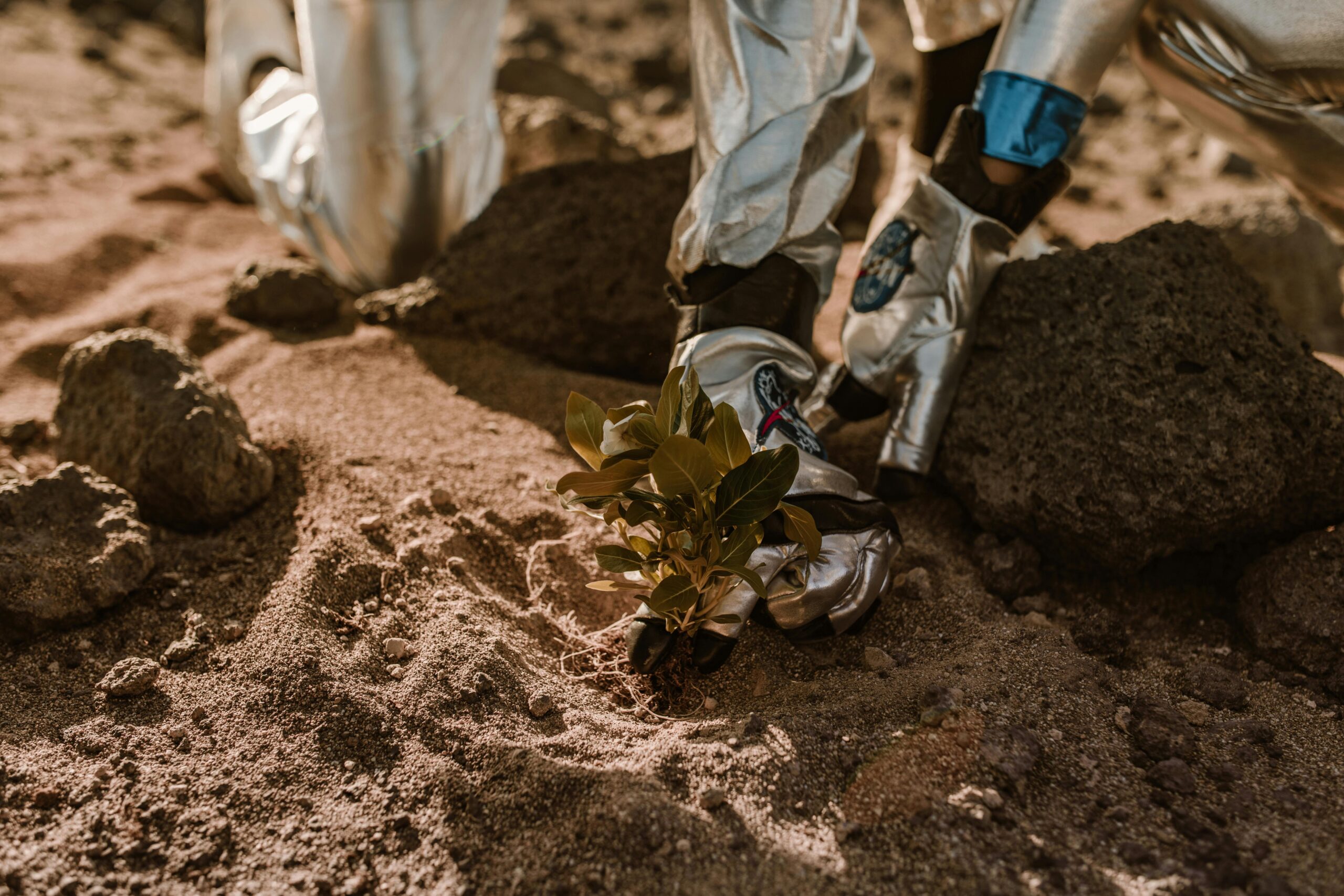
Proponents of terraforming often frame humanity’s role in more positive terms—not as exploiters, but as stewards spreading life throughout a predominantly lifeless universe. This perspective suggests that consciousness and biological complexity are precious cosmic rarities that should be propagated wherever possible. From this view, leaving habitable planets barren when they could support flourishing ecosystems represents a failure of cosmic responsibility.
The concept of “ecopoiesis”—the fabrication of sustainable ecosystems on currently lifeless planets—offers a middle ground in these debates. Rather than full terraforming optimized exclusively for human habitation, ecopoiesis prioritizes establishing self-sustaining biological systems that might never become fully Earth-like but would increase the total amount of life in the universe.
The Value of Biological Diversity Beyond Earth
Advocates argue that spreading terrestrial life creates value by increasing universal complexity, diversity, and the potential for future evolutionary innovation. Earth’s history includes multiple mass extinction events; establishing life on other worlds could serve as a biological backup, ensuring that the remarkable phenomenon of terrestrial biology survives even planetary-scale catastrophes.
This perspective resonates with cosmist philosophy, which views the emergence of consciousness as a cosmically significant development that carries with it responsibilities to preserve and propagate awareness throughout the universe. Humans, as the only known technologically capable species, might have a unique opportunity—and perhaps obligation—to facilitate life’s expansion beyond its planetary cradle.
🌐 Governance, Justice, and Who Decides
Beyond philosophical debates about whether we should terraform lies the equally thorny question of who gets to make such decisions. Terraforming represents a commons problem of unprecedented scale—planetary transformation would affect all of humanity, future generations, and potentially indigenous life forms, yet current international space law provides insufficient frameworks for managing such scenarios.
The Outer Space Treaty declares that outer space, including celestial bodies, is the “province of all mankind” and cannot be subject to national appropriation. However, it doesn’t adequately address planetary engineering scenarios or establish clear decision-making mechanisms for irreversible planetary modifications. The treaty’s provisions were designed for an era of limited spaceflight capability, not the age of potential planetary engineering.
Preventing Cosmic Colonialism
Historical patterns of terrestrial colonialism provide cautionary lessons for space development. The exploitation of resources, displacement of indigenous peoples, and environmental devastation that characterized Earth’s colonial era should inform ethical frameworks for space expansion. Ensuring that terraforming benefits all humanity rather than enriching a privileged few requires proactive governance structures.
Questions of distributive justice loom large: Who would benefit from terraformed worlds? Would access be equitable or reserved for wealthy nations and individuals? How do we ensure that the enormous resources required for terraforming don’t exacerbate terrestrial inequality by diverting funds from pressing Earth-bound challenges like poverty, disease, and climate change?
🌡️ The Climate Change Paradox
The discussion of terraforming other planets occurs against the backdrop of anthropogenic climate change on Earth—an uncomfortable irony not lost on critics. Humanity has unintentionally terraformed Earth in destructive ways, driving species extinction, ocean acidification, and atmospheric disruption. This track record raises legitimate questions about our readiness to deliberately engineer planetary environments elsewhere.
Some argue that mastering terraforming technologies could provide insights applicable to Earth’s climate challenges, potentially developing carbon sequestration methods, atmospheric regulation techniques, or ecosystem restoration approaches. This perspective frames planetary engineering research as potentially beneficial for terrestrial environmental management.
Conversely, others contend that pursuing terraforming while failing to address Earth’s environmental crisis reflects misplaced priorities—a form of escapism that avoids confronting the difficult political and economic changes needed to achieve sustainability on our home planet. Why attempt to terraform Mars when we’re “deterraforming” Earth?
⏳ Temporal Ethics and Intergenerational Responsibility
Terraforming timescales present unique ethical challenges. Most realistic proposals suggest transformation periods spanning centuries to millennia. Initiating such projects commits countless future generations to continue efforts they had no voice in approving, consuming resources for goals they might not share, and inheriting potential consequences of unforeseen complications.
The concept of intergenerational justice becomes paramount. Do current generations possess the moral authority to make irreversible decisions that will profoundly shape the lives of people centuries hence? How do we balance our vision of humanity’s cosmic future against the autonomy of those who will actually inhabit that future?
The Value of Preservation
Some philosophers advocate for preserving at least some celestial bodies in their natural state—creating cosmic wilderness areas or planetary parks. This approach recognizes aesthetic, scientific, and philosophical values in maintaining unmodified worlds for study, contemplation, and as reminders of nature’s independent existence beyond human purposes.
The moon, for instance, might be designated a protected heritage site due to its cultural significance across human civilizations and its scientific value as a record of early solar system history. Similar arguments could apply to particularly scientifically valuable locations on Mars, such as regions with potential biosignatures or unique geological features.
🧬 Synthetic Biology and Adaptive Approaches
Advances in genetic engineering and synthetic biology offer alternative approaches to traditional terraforming. Rather than radically altering planetary environments to suit unmodified humans, we might modify humans and other terrestrial organisms to thrive in alien conditions. This “bioforming” reverses the traditional terraforming paradigm—adapting life to planets rather than planets to life.
Engineered humans with enhanced radiation resistance, modified oxygen requirements, or tolerance for different atmospheric pressures could colonize worlds without requiring full planetary transformation. Similarly, designer microorganisms and plants could be tailored to survive and gradually improve alien environments through slower, more controlled processes than traditional terraforming proposals.
This approach raises its own ethical questions about human genetic modification, the creation of potentially divergent human subspecies adapted to different worlds, and whether such beings would maintain continuity with terrestrial humanity or represent something fundamentally new. The prospect of speciation—humans evolving into distinct species on different worlds—carries profound philosophical implications for human identity and unity.
💭 Finding the Ethical Path Forward
Navigating terraforming’s ethical landscape requires balancing competing values: scientific discovery, human expansion, environmental preservation, and respect for potential indigenous life. No single principle provides clear guidance across all scenarios, suggesting the need for nuanced, context-specific approaches rather than absolute prohibitions or carte blanche approval.
A prudent path forward might include several key commitments: conducting exhaustive searches for indigenous life before any irreversible modifications; establishing robust international governance frameworks with genuine global participation; prioritizing scientific understanding over hasty colonization; considering reversibility and implementing changes incrementally rather than through rapid, irreversible transformation; and maintaining some celestial bodies in pristine condition for scientific and philosophical reasons.
Developing a Cosmic Environmental Ethic
Ultimately, addressing terraforming’s ethical challenges requires developing a comprehensive cosmic environmental ethic—an extension of terrestrial environmental philosophy to planetary scales. This ethic must reconcile human flourishing with respect for non-human nature, balance current needs against future generations’ interests, and recognize both instrumental and intrinsic value in natural systems.
Such an ethic should be humble about human knowledge and capabilities, acknowledging that our understanding of planetary systems remains incomplete and that complex systems frequently produce unexpected outcomes. It should also be adaptive, capable of evolving as our scientific understanding deepens and as humanity’s relationship with space matures.
🌌 The Transformative Choice Before Us
The terraforming debate ultimately reflects deeper questions about human nature, purpose, and our relationship with the cosmos. Are we cosmic gardeners with a mandate to spread life throughout a barren universe? Humble explorers who should tread carefully and preserve what we find? Or something more nuanced—stewards who must balance expansion with preservation, ambition with caution?
These questions lack simple answers, requiring ongoing dialogue among scientists, ethicists, policymakers, and diverse global communities. The decisions we make regarding planetary engineering will shape not just the physical landscape of other worlds, but the moral landscape of humanity’s future—defining what kind of cosmic citizens we choose to become.
As we stand at this threshold, the imperative is clear: we must engage these ethical questions with the same rigor and creativity we apply to technical challenges. Humanity’s cosmic future depends not just on our engineering capabilities, but on our wisdom, restraint, and commitment to values that extend beyond immediate human interests. The planets await, silent and patient, while we determine whether we’re ready for the profound responsibility of cosmic transformation.