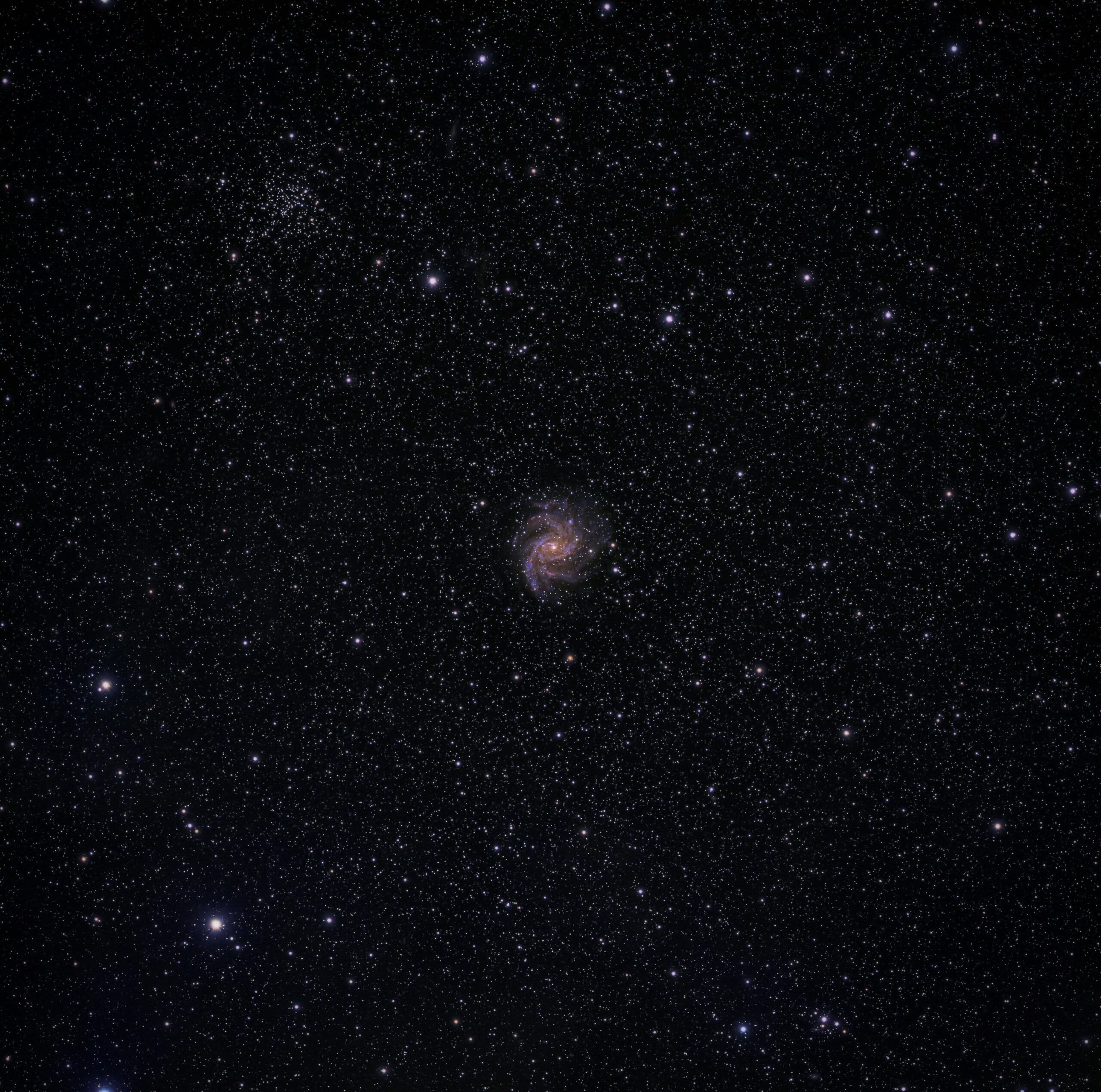
The universe is a vast laboratory where planets are born from dust, shaped by gravity, and transformed into complex worlds with dynamic atmospheres. Understanding this cosmic journey reveals fundamental truths about our own existence and the potential for life beyond Earth.

From the earliest moments when microscopic particles collide in protoplanetary disks to the development of weather systems on distant worlds, planet formation represents one of astronomy’s most captivating mysteries. Scientists have made remarkable progress in recent decades, combining observational data from space telescopes with sophisticated computer models to piece together the intricate processes that transform cosmic dust into living, breathing planetary systems.
🌌 The Birth of Worlds: From Nebulae to Protoplanetary Disks
Planet formation begins in the cold, dark regions of molecular clouds—vast reservoirs of gas and dust scattered throughout galaxies. When portions of these clouds collapse under their own gravity, they form spinning disks of material around newly born stars. These protoplanetary disks contain all the raw ingredients necessary for planetary construction.
The transformation from cloud to disk is triggered by various mechanisms. Shockwaves from nearby supernova explosions can compress cloud material, initiating gravitational collapse. Alternatively, the collision of cloud fragments or simple gravitational instabilities can set the process in motion. Regardless of the trigger, the result is the same: a flattened disk of gas and dust orbiting a proto-star at its center.
Within these disks, temperatures vary dramatically with distance from the central star. Close to the star, only refractory materials like metals and silicates can remain solid. Further out, volatile compounds like water, ammonia, and methane condense into ice. This temperature gradient creates distinct compositional zones that ultimately determine the types of planets that form at different orbital distances.
The Remarkable Journey of Cosmic Dust Particles
Dust grains in protoplanetary disks are remarkably small—typically less than a micrometer in diameter. Yet these microscopic particles are the fundamental building blocks of all planets. The challenge lies in understanding how particles grow from dust specks to mountain-sized planetesimals spanning kilometers across.
The initial growth phase occurs through direct collisions. Dust grains stick together through electrostatic forces and molecular bonds, gradually building larger aggregates. This process works efficiently until particles reach roughly centimeter sizes, at which point a significant problem emerges: the “meter-size barrier.”
Meter-sized objects experience strong aerodynamic drag from the surrounding gas, causing them to spiral rapidly inward toward the star—a process that would destroy them before they could grow larger. Scientists have proposed several solutions to this puzzle, including turbulent concentration of particles, formation within pressure bumps in the disk, and rapid growth through streaming instabilities that bypass the problematic size range entirely.
Planetesimal Formation: Crossing the Critical Threshold
Once objects reach kilometer sizes, they become planetesimals—the first generation of solid bodies dominated by their own gravity rather than gas drag. These planetesimals represent a crucial milestone in planet formation, as they can grow efficiently through gravitational interactions and collisions.
Planetesimals don’t form uniformly throughout the disk. Observations of modern protoplanetary disks reveal rings, gaps, and asymmetric structures that suggest planetesimal formation occurs preferentially in certain locations. These concentrations may be controlled by pressure variations in the disk, gravitational perturbations from forming planets, or the location of ice lines where volatile materials condense.
🪐 From Planetesimals to Protoplanets: The Growth Continues
Planetesimals collide and merge through a process called accretion. In the early stages, growth is relatively orderly, with larger bodies gravitationally attracting smaller ones. A planetesimal that grows slightly larger than its neighbors gains a competitive advantage, sweeping up material from a wider zone and entering a phase of runaway growth.
This runaway accretion produces planetary embryos or protoplanets—objects ranging from Moon-sized to Mars-sized. Multiple protoplanets typically form in each planetary system, distributed throughout the protoplanetary disk according to the local density of solid material.
The final stage of terrestrial planet formation involves giant impacts between protoplanets. These cataclysmic collisions are violent and chaotic, fundamentally reshaping the planetary bodies involved. Earth’s Moon likely formed from debris ejected during such a collision between the proto-Earth and a Mars-sized impactor scientists call Theia.
Gas Giant Formation: A Race Against Time
Giant planets like Jupiter and Saturn form through a different pathway that requires capturing massive atmospheres from the surrounding nebular gas. This process must occur quickly, as protoplanetary disks typically dissipate within 3-10 million years.
The core accretion model proposes that gas giants begin as solid cores roughly 10 times Earth’s mass. Once a core reaches this critical threshold, it can gravitationally capture gas from the surrounding disk. Gas accumulation accelerates rapidly once begun, allowing the planet to reach many times Jupiter’s mass if sufficient gas remains available.
An alternative mechanism—disk instability—suggests that gas giants can form directly from gravitational collapse within the protoplanetary disk, bypassing the need for a solid core. This process could operate much faster than core accretion, potentially explaining gas giants found at large orbital distances where core accretion struggles to operate within the disk’s lifetime.
The Critical Role of Ice Lines in Planetary Architecture
Ice lines mark locations in protoplanetary disks where specific volatile compounds transition between gas and solid phases. The most important is the water ice line (or snow line), typically located around 3-5 astronomical units from a Sun-like star—roughly where the asteroid belt orbits in our solar system.
Beyond the ice line, solid material is dramatically more abundant because ice makes up a significant fraction of available mass. This abundance advantage explains why gas giants preferentially form beyond the ice line, where solid cores can grow large enough to capture gas atmospheres before the disk dissipates.
Ice lines aren’t static boundaries. They migrate inward and outward as the central star’s luminosity changes and as the disk evolves. These movements can transport volatile-rich material to different locations, potentially delivering water and organic compounds to terrestrial planets forming in the inner system.
🌍 Planetary Migration: Worlds on the Move
Planets don’t necessarily remain where they form. Gravitational interactions with the gaseous protoplanetary disk or with other planets can cause significant orbital migration. This discovery revolutionized planetary science in the 1990s when astronomers found “hot Jupiters”—gas giants orbiting extremely close to their stars, where they couldn’t possibly have formed.
Several migration mechanisms operate in planetary systems:
- Type I migration: Affects smaller planets embedded in gas disks, typically causing inward migration through asymmetric gravitational torques with the surrounding gas.
- Type II migration: Occurs when massive planets open gaps in the disk, then migrate inward along with the viscously evolving disk material.
- Planet-planet scattering: Gravitational encounters between planets can dramatically alter orbits, ejecting some planets entirely while sending others inward or outward.
- Kozai-Lidov cycles: In systems with multiple planets or stellar companions, long-term gravitational perturbations can exchange orbital eccentricity and inclination, causing planets to migrate.
Migration profoundly influences planetary system architecture. It can deliver ice-rich material to the inner system, enhance or suppress planet formation in specific regions, and determine which planets survive and which are destroyed through collisions or ejection.
Atmospheric Birth and Chemical Composition
Planetary atmospheres originate from multiple sources depending on the planet type and formation history. Gas giants capture their atmospheres directly from the protoplanetary nebula, resulting in compositions dominated by hydrogen and helium similar to the Sun.
Terrestrial planet atmospheres are more complex. Primary atmospheres captured from the nebula are typically lost, either blown away by the young star’s energetic radiation or stripped during giant impacts. Secondary atmospheres then develop through volcanic outgassing, which releases gases trapped in the planet’s interior, and through delivery of volatile-rich material by comets and asteroids.
Earth’s atmosphere evolved dramatically over billions of years. The early atmosphere was likely reducing (lacking free oxygen), composed primarily of water vapor, carbon dioxide, nitrogen, and smaller amounts of methane and ammonia. The rise of photosynthetic life fundamentally transformed atmospheric chemistry, converting it to the oxygen-rich mixture we breathe today.
Atmospheric Escape: The Loss of Precious Gases
Planets constantly lose atmospheric material to space through various escape mechanisms. Understanding these processes is crucial for determining which worlds can maintain habitable conditions over geological timescales.
Thermal escape (Jeans escape) occurs when gas molecules in the upper atmosphere achieve sufficient velocity to overcome the planet’s gravity. This process preferentially removes lighter elements like hydrogen and helium. Solar radiation, particularly ultraviolet light, heats upper atmospheric layers and drives thermal escape.
More dramatic escape occurs through hydrodynamic processes, where intense stellar radiation heats the atmosphere so strongly that it flows away like a wind. Young stars are particularly active, producing energetic radiation that can completely strip atmospheres from small planets orbiting too close. This likely explains why many detected exoplanets smaller than Neptune appear to have lost substantial atmospheric mass.
🌦️ The Development of Dynamic Atmospheric Systems
As planets mature, their atmospheres develop complex circulation patterns driven by the star’s heating and the planet’s rotation. These atmospheric dynamics determine weather patterns, climate zones, and the redistribution of energy across the planetary surface.
Atmospheric circulation begins with differential heating—the equator receives more stellar energy than the poles, creating temperature gradients. Hot air rises at the equator and flows poleward at high altitudes, while cooler air moves equatorward at the surface. The planet’s rotation deflects these flows through the Coriolis effect, creating the characteristic band structure visible on Jupiter and Saturn.
The complexity of atmospheric dynamics depends on multiple factors including rotation rate, atmospheric mass, stellar heating intensity, and surface properties. Earth’s atmosphere organizes into three circulation cells in each hemisphere, producing trade winds, westerlies, and polar easterlies. Venus, with its extremely slow rotation, develops a completely different pattern dominated by a super-rotating atmosphere that circles the planet faster than the solid surface rotates.
Cloud Formation and Atmospheric Chemistry
Clouds play crucial roles in planetary atmospheres, affecting energy balance, chemistry, and appearance. Cloud composition varies dramatically depending on atmospheric temperature and chemical inventory. Earth’s clouds consist of water droplets and ice crystals. Venus’s thick clouds are composed of sulfuric acid. Jupiter and Saturn host ammonia ice clouds, water clouds, and ammonium hydrosulfide clouds at different altitudes.
On exoplanets, astronomers have detected or predicted even more exotic cloud types. Hot Jupiters may feature clouds of vaporized rock, iron droplets, or corundum (the mineral that forms rubies and sapphires). Understanding cloud properties is essential for interpreting observations and determining atmospheric compositions.
Magnetic Fields: Invisible Shields and Dynamic Drivers
Many planets generate magnetic fields through dynamo processes in their conducting interiors—typically molten iron cores for terrestrial planets or metallic hydrogen layers for gas giants. These magnetic fields extend into space, creating magnetospheres that shield atmospheres from erosive stellar wind particles.
Earth’s magnetic field has been crucial for maintaining our atmosphere and protecting surface life from harmful radiation. Mars, lacking a global magnetic field, has experienced significant atmospheric stripping over billions of years. Understanding magnetic field generation and evolution is therefore essential for assessing planetary habitability.
Magnetic fields also drive spectacular atmospheric phenomena. Auroras occur when charged particles channeled along magnetic field lines collide with atmospheric gases, producing beautiful light displays observed on Earth, Jupiter, Saturn, and other worlds.
🔭 Modern Observations Revolutionizing Our Understanding
The past few decades have witnessed an observational revolution in planet formation studies. Powerful telescopes like ALMA (Atacama Large Millimeter/submillimeter Array) image protoplanetary disks in unprecedented detail, revealing rings, spirals, and gaps that provide direct evidence of planet formation in action.
Space missions like Kepler and TESS have discovered thousands of exoplanets, revealing that planetary systems are common and diverse. These discoveries show that planet formation operates successfully around many different types of stars and produces system architectures ranging from tightly packed systems of super-Earths to widely spaced giant planets.
The James Webb Space Telescope now enables detailed atmospheric characterization of exoplanets, measuring chemical compositions, temperature structures, and cloud properties. These observations test theories of atmospheric formation and evolution, revealing which predictions succeed and which require refinement.
Connecting Formation History to Present-Day Worlds
Each planet’s current state reflects its entire formation and evolutionary history. Bulk composition records the temperature and location where the planet formed. Atmospheric composition reveals volatile delivery mechanisms and subsequent atmospheric processing. Orbital properties preserve evidence of migration and gravitational interactions.
By studying planetary systems at different evolutionary stages—from young protoplanetary disks to mature systems billions of years old—astronomers piece together the complete narrative of planetary development. This comparative approach reveals universal formation processes while explaining the remarkable diversity of observed worlds.
⭐ Implications for Habitability and Life
Understanding planet formation directly impacts the search for life beyond Earth. Formation processes determine which planets receive sufficient water and organic compounds to support life. Migration history influences whether planets remain in habitable zones where liquid water can exist on surfaces. Atmospheric retention mechanisms determine which worlds maintain stable climates over the billions of years required for complex life to evolve.
The study of planetary atmospheres informs the search for biosignatures—atmospheric signatures that might indicate biological activity. Scientists are developing techniques to detect oxygen, methane, and other potentially biological gases in exoplanet atmospheres, preparing for the day when we might finally answer whether life exists elsewhere in the universe.
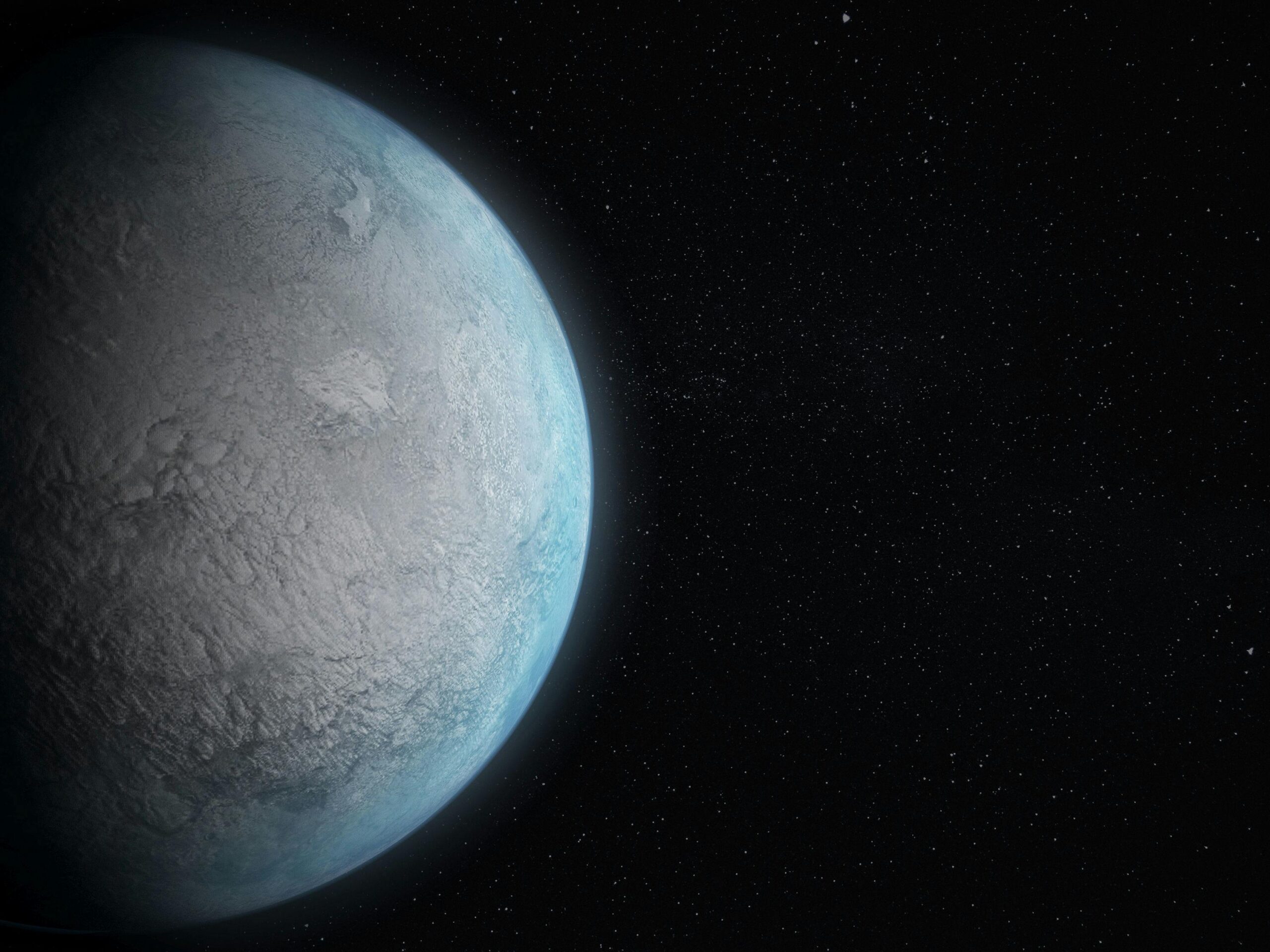
Unresolved Questions and Future Frontiers
Despite tremendous progress, fundamental questions remain. How exactly do particles overcome the meter-size barrier? What determines the efficiency of planet formation in different environments? How common are planetary systems like our own? Can we predict which planets will develop life-supporting conditions?
Future telescopes and missions will address these questions. The Extremely Large Telescope and other ground-based facilities will image exoplanets directly and characterize their atmospheres. Space missions to icy moons in our own solar system will search for subsurface oceans and possible life. Continued observations of protoplanetary disks will catch planet formation in earlier and earlier stages.
The field of planet formation stands at an exciting threshold. Observations now routinely detect features that were purely theoretical just years ago. Computer simulations achieve unprecedented realism by incorporating complex physics and chemistry. The synthesis of observation, theory, and laboratory experiments continues to unlock the secrets of how cosmic dust becomes dynamic, habitable worlds—and perhaps how some of those worlds, like Earth, become cradles for life itself.