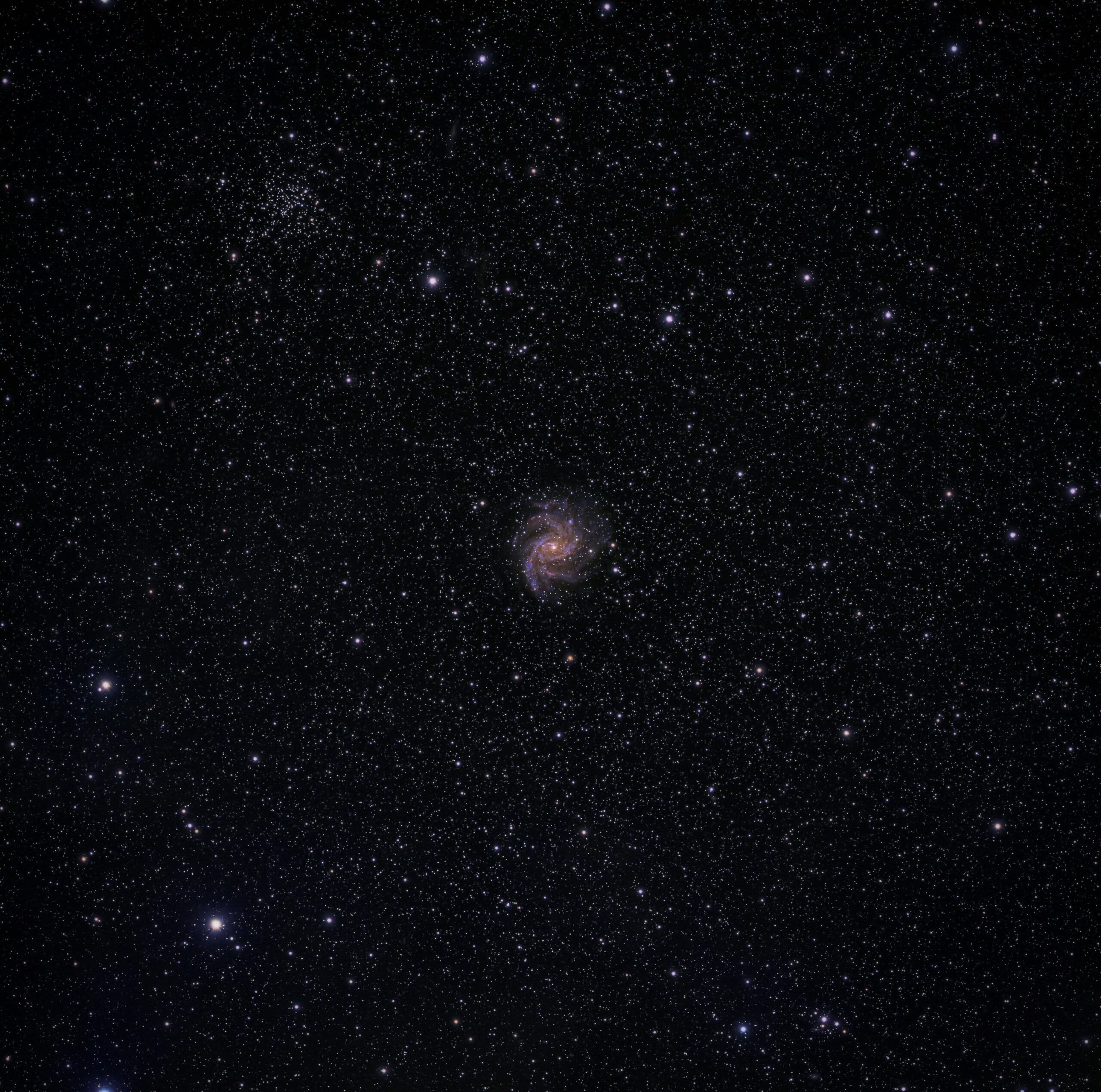
The intersection of quantum mechanics and biology reveals extraordinary secrets about life itself, extending far beyond Earth’s boundaries into the cosmic expanse where innovation meets the fundamental forces of nature.

As humanity ventures deeper into space exploration, understanding how quantum processes influence biological systems becomes crucial for survival and advancement. From the mysterious mechanisms of photosynthesis to the navigation abilities of migratory birds, quantum biology offers profound insights that could revolutionize our approach to space colonization and extraterrestrial life detection. 🌌
The Quantum Foundation of Life’s Blueprint
Quantum biology represents a paradigm shift in our understanding of living systems, bridging the microscopic world of subatomic particles with macroscopic biological functions. This emerging field demonstrates that life doesn’t merely follow classical physics but actively harnesses quantum phenomena to perform essential operations with remarkable efficiency.
At the molecular level, biological processes exploit quantum coherence, tunneling, and entanglement—phenomena once thought too delicate to survive in the warm, wet environment of living cells. Research has revealed that enzymes utilize quantum tunneling to accelerate chemical reactions by factors of thousands, enabling metabolic processes that would otherwise be impossibly slow according to classical chemistry.
The DNA molecule itself exhibits quantum properties that influence mutation rates and genetic stability. Proton tunneling within the hydrogen bonds holding base pairs together can cause spontaneous mutations, a quantum effect with profound evolutionary implications. This quantum dance of particles at the heart of heredity suggests that evolution itself may be fundamentally quantum mechanical.
Photosynthesis: Nature’s Quantum Computer 🌿
Perhaps nowhere is quantum biology more spectacularly demonstrated than in photosynthesis, the process that sustains most life on Earth. Plants, algae, and certain bacteria convert sunlight into chemical energy with an efficiency approaching 100%—a feat that seems to defy classical physics.
The secret lies in quantum coherence. When a photon strikes a light-harvesting complex, it creates an exciton—a quantum particle of energy. Rather than randomly bouncing between molecules as classical physics would predict, this exciton exists in a quantum superposition, simultaneously exploring all possible pathways to the reaction center. This quantum search algorithm allows the exciton to find the optimal route almost instantaneously.
Scientists have observed these quantum effects persisting for hundreds of femtoseconds at biological temperatures, far longer than theoretical predictions suggested possible. This discovery has inspired the development of quantum-enhanced solar cells and energy transfer systems that could prove invaluable for sustaining human colonies in space where energy efficiency is paramount.
Implications for Space-Based Energy Systems
Understanding photosynthetic quantum mechanics opens revolutionary possibilities for space exploration. Biologically-inspired quantum solar collectors could achieve unprecedented efficiency in capturing stellar radiation, whether from our Sun or distant stars. Such systems could power spacecraft, orbital habitats, and planetary settlements with minimal mass and maximum energy yield.
Moreover, engineering artificial photosynthesis systems that incorporate quantum principles could enable closed-loop life support systems for long-duration space missions. These systems would convert carbon dioxide into oxygen and produce nutrients with efficiency levels impossible through conventional chemical processes.
Quantum Navigation in the Cosmos 🧭
One of the most intriguing discoveries in quantum biology involves the magnetic sense of migratory birds. These creatures navigate across continents using Earth’s magnetic field through a quantum mechanism involving radical pairs—molecules with unpaired electrons whose quantum spin states are influenced by magnetic fields.
The cryptochrome proteins in birds’ eyes contain these radical pairs, and their quantum spin states determine chemical reaction pathways that ultimately produce visual signals. This quantum compass operates with sensitivity exceeding any human-made magnetometer, capable of detecting field variations as subtle as those caused by geological features hundreds of kilometers away.
For space applications, this biological inspiration has led to the development of quantum sensors for navigation systems that don’t rely on GPS satellites. Such sensors could guide spacecraft through deep space by detecting the subtle magnetic signatures of celestial bodies, cosmic rays, and interstellar magnetic fields.
Developing Bio-Inspired Quantum Sensors
Research teams worldwide are working to replicate and enhance biological quantum sensing mechanisms for technological applications. These efforts have produced quantum magnetometers small enough to integrate into spacecraft systems yet sensitive enough to map magnetic field topographies of distant planets and moons.
The implications extend to searching for extraterrestrial life. Since many biological processes exhibit quantum signatures, quantum sensors could detect the subtle quantum fields associated with metabolic activity, even in extreme environments like the subsurface oceans of Europa or Enceladus.
Quantum Tunneling in Enzymatic Reactions ⚡
Enzymes are biological catalysts that accelerate chemical reactions essential for life. Classical chemistry cannot fully explain their extraordinary efficiency, but quantum tunneling provides the missing piece of the puzzle. Instead of climbing over energy barriers, particles quantum tunnel through them, dramatically increasing reaction rates.
This phenomenon is particularly important in low-temperature environments like those found on Mars or in the outer solar system. Quantum tunneling allows chemical reactions to proceed at temperatures where classical chemistry would essentially halt, suggesting that life based on quantum-enhanced biochemistry might thrive in frigid extraterrestrial environments previously considered inhospitable.
Researchers have documented quantum tunneling in alcohol dehydrogenase, soybean lipoxygenase, and numerous other enzymes crucial for metabolism. The hydrogen atoms involved in these reactions can tunnel across distances greater than classical particle sizes would allow, effectively teleporting through energy barriers.
Engineering Quantum-Enhanced Biocatalysts for Space
Understanding enzymatic quantum tunneling enables the design of synthetic catalysts optimized for space applications. These catalysts could facilitate pharmaceutical production during long missions, convert waste products into useful materials, and enable chemical synthesis in zero-gravity environments where conventional methods fail.
Space agencies are exploring bioengineered organisms with enhanced quantum tunneling capabilities in their enzymes, potentially creating microorganisms that could terraform planetary atmospheres or extract resources from asteroid regolith with unprecedented efficiency.
Quantum Coherence in Neural Processing 🧠
The human brain operates with computational capabilities that far exceed classical explanations of neuronal activity. Emerging evidence suggests quantum processes may contribute to consciousness, cognition, and information processing in neural tissues.
Microtubules—cylindrical protein structures within neurons—may maintain quantum coherence at physiological temperatures, functioning as quantum computational elements. This quantum brain hypothesis, while controversial, offers explanations for aspects of consciousness, anesthesia mechanisms, and cognitive processing speeds that classical neuroscience struggles to address.
For space exploration, understanding quantum neural processes could revolutionize brain-computer interfaces, enabling direct quantum communication between astronauts and spacecraft systems. Such interfaces might also protect cognitive function during extended periods in altered gravitational fields or high-radiation environments.
Astrobiology Through the Quantum Lens 👽
The search for extraterrestrial life has traditionally focused on detecting biosignatures like atmospheric oxygen or methane anomalies. Quantum biology suggests we should also look for quantum signatures—distinctive patterns of coherence, entanglement, or tunneling that indicate biological activity.
Life elsewhere in the universe might exploit quantum mechanics in ways we haven’t imagined. Silicon-based organisms might use quantum effects to process information in extreme temperatures. Crystalline life forms could employ quantum entanglement for colony-wide communication. Radiation-resistant extremophiles might harness quantum error correction mechanisms superior to those in terrestrial DNA.
Quantum Biosignatures in Exoplanet Detection
Next-generation telescopes equipped with quantum sensors could detect subtle spectroscopic signatures indicating quantum biological processes on exoplanets. Polarized light patterns from photosynthetic organisms, quantum fluorescence signatures from bioluminescent chemistry, or coherent energy transfer patterns could reveal life light-years away.
The James Webb Space Telescope and future missions might discover quantum signatures in exoplanet atmospheres, revolutionizing our understanding of life’s universality and diversity throughout the cosmos.
Quantum Protection Against Cosmic Radiation ☢️
One of the greatest challenges for space exploration is protecting biological systems from cosmic radiation. Interestingly, certain organisms exhibit remarkable radiation resistance through quantum mechanisms.
The bacterium Deinococcus radiodurans survives radiation doses thousands of times lethal to humans, partially through quantum-enhanced DNA repair mechanisms. These bacteria maintain multiple genome copies and employ quantum tunneling processes to rapidly identify and repair radiation damage with extraordinary precision.
Research into these quantum protection mechanisms could lead to pharmaceutical interventions or genetic modifications enabling humans to withstand space radiation during Mars missions or interstellar travel. Understanding how quantum processes contribute to radiation resistance might also inform the design of quantum error correction systems for spacecraft computers operating in high-radiation environments.
Quantum Innovation for Space Technology 🚀
The principles of quantum biology are inspiring revolutionary technologies for space exploration:
- Quantum communication systems: Entanglement-based communication could enable instantaneous data transfer across vast distances, solving the light-speed delay problem in deep space communications.
- Quantum propulsion concepts: Understanding how biological systems harness quantum vacuum energy might lead to breakthrough propulsion technologies.
- Quantum life support: Biologically-inspired quantum systems could recycle air, water, and nutrients with near-perfect efficiency in closed habitats.
- Quantum medical diagnostics: Quantum sensors could detect molecular-level health changes before symptoms appear, crucial for maintaining astronaut health during long missions.
- Quantum materials synthesis: Mimicking how organisms build complex structures atom by atom through quantum processes could enable space-based manufacturing.
The Quantum Biology of Extremophiles
Organisms thriving in Earth’s most extreme environments—deep ocean vents, Antarctic ice, acid pools, and high-radiation zones—often employ quantum mechanisms to survive conditions approximating those on other worlds.
Thermophilic bacteria living in near-boiling water use quantum-stabilized proteins that maintain structural integrity at temperatures where ordinary proteins denature. Psychrophilic organisms in polar ice employ quantum tunneling to maintain metabolic activity when classical chemistry would freeze.
These extremophiles serve as living laboratories for understanding how quantum biology enables life in harsh space environments. Their study informs the design of bioengineered organisms that could potentially survive on Mars, Venus, or the moons of giant planets, paving the way for terraforming or resource extraction operations.
Quantum Entanglement in Biological Systems 🔗
Recent research suggests that quantum entanglement—the phenomenon where particles remain connected regardless of distance—might play roles in biological systems. While controversial, evidence indicates that entangled states might exist in photosynthetic complexes, bird navigation systems, and possibly even neural tissues.
If biological entanglement proves robust, it could revolutionize biotechnology for space applications. Entangled biological sensors could form distributed networks across planetary surfaces, sharing information instantaneously. Entanglement-based biological computers might process information using living cells as quantum computational elements.
The possibility of engineering biological systems that maintain quantum entanglement at room temperature would represent a breakthrough for quantum computing, potentially creating hybrid bio-quantum processors combining the adaptability of living systems with quantum computational power.

Unlocking Future Frontiers: Where Quantum Biology Meets Cosmic Destiny
The convergence of quantum mechanics and biology reveals that life is fundamentally woven into the fabric of quantum reality. This understanding transforms how we approach space exploration, suggesting that the quantum nature of biology isn’t merely an interesting curiosity but essential for humanity’s expansion beyond Earth.
As we develop quantum technologies inspired by biological systems, we’re not simply copying nature—we’re discovering fundamental principles that govern how complex systems extract order from quantum chaos, how information flows through living networks, and how consciousness might emerge from quantum processes.
The future of space exploration will likely be quantum biological. Spacecraft incorporating quantum-enhanced photosynthesis, astronauts with quantum-augmented neural interfaces, settlements powered by quantum energy systems, and perhaps even human consciousness backed up in quantum states—these aren’t science fiction but logical extensions of current quantum biology research.
The Next Giant Leap 🌟
Understanding how quantum processes shape life positions humanity to take the next evolutionary leap. We stand at the threshold of becoming a truly spacefaring species, equipped not just with rockets and habitats, but with profound comprehension of life’s quantum foundations.
The cosmic code that quantum biology is helping us unlock reveals that life isn’t separate from the universe’s fundamental quantum nature—it’s an expression of it. Every cell in your body performs quantum computations, every thought involves quantum processes, and every beat of your heart relies on quantum tunneling.
As we venture into the vastness of space, we carry with us not just the machinery of civilization but the quantum biological heritage that connects us to the cosmos itself. In unlocking this cosmic code, we discover that we’re not strangers in a hostile universe but quantum beings perfectly equipped to explore, adapt, and flourish among the stars.
The quantum revolution in biology and its applications to space exploration represent humanity’s most ambitious endeavor yet—to understand life at its most fundamental level and use that knowledge to secure our future across multiple worlds, solar systems, and perhaps one day, across the galaxy itself. The journey has only just begun, and the discoveries awaiting us in the quantum biological realm promise to redefine what’s possible for life in the universe. 🌌✨