
The cosmos beckons humanity with promises of discovery, resources, and new frontiers. As space exploration accelerates into an unprecedented era, the systems that transport supplies, equipment, and cargo are becoming just as critical as the spacecraft themselves.

Traditional approaches to space logistics are rapidly evolving to meet the demands of sustained lunar presence, Mars missions, asteroid mining, and permanent orbital habitats. The revolution in space cargo systems represents not just technological advancement, but a fundamental reimagining of how we sustain human activity beyond Earth’s atmosphere.
🚀 The Growing Imperative for Advanced Space Logistics
As space agencies and private companies establish ambitious goals for deep-space exploration, the infrastructure supporting these missions must undergo radical transformation. NASA’s Artemis program aims to establish a permanent lunar presence, while SpaceX envisions Mars colonization within decades. These objectives require reliable, efficient, and scalable cargo transportation systems that can operate across vast distances with minimal failure rates.
The International Space Station demonstrated that sustained human presence in space demands continuous resupply missions. However, future outposts on the Moon and Mars will require exponentially more sophisticated logistics networks. Traditional point-to-point delivery models are insufficient for establishing self-sustaining extraterrestrial habitats where supply chain interruptions could prove catastrophic.
The economic dimension cannot be overlooked. Launch costs, though decreasing thanks to reusable rockets, still represent the primary barrier to ambitious space operations. Innovative cargo systems must maximize payload efficiency while minimizing mass, volume, and energy consumption to make space exploration economically viable for both governmental and commercial entities.
Autonomous Cargo Vehicles: The Backbone of Space Supply Chains
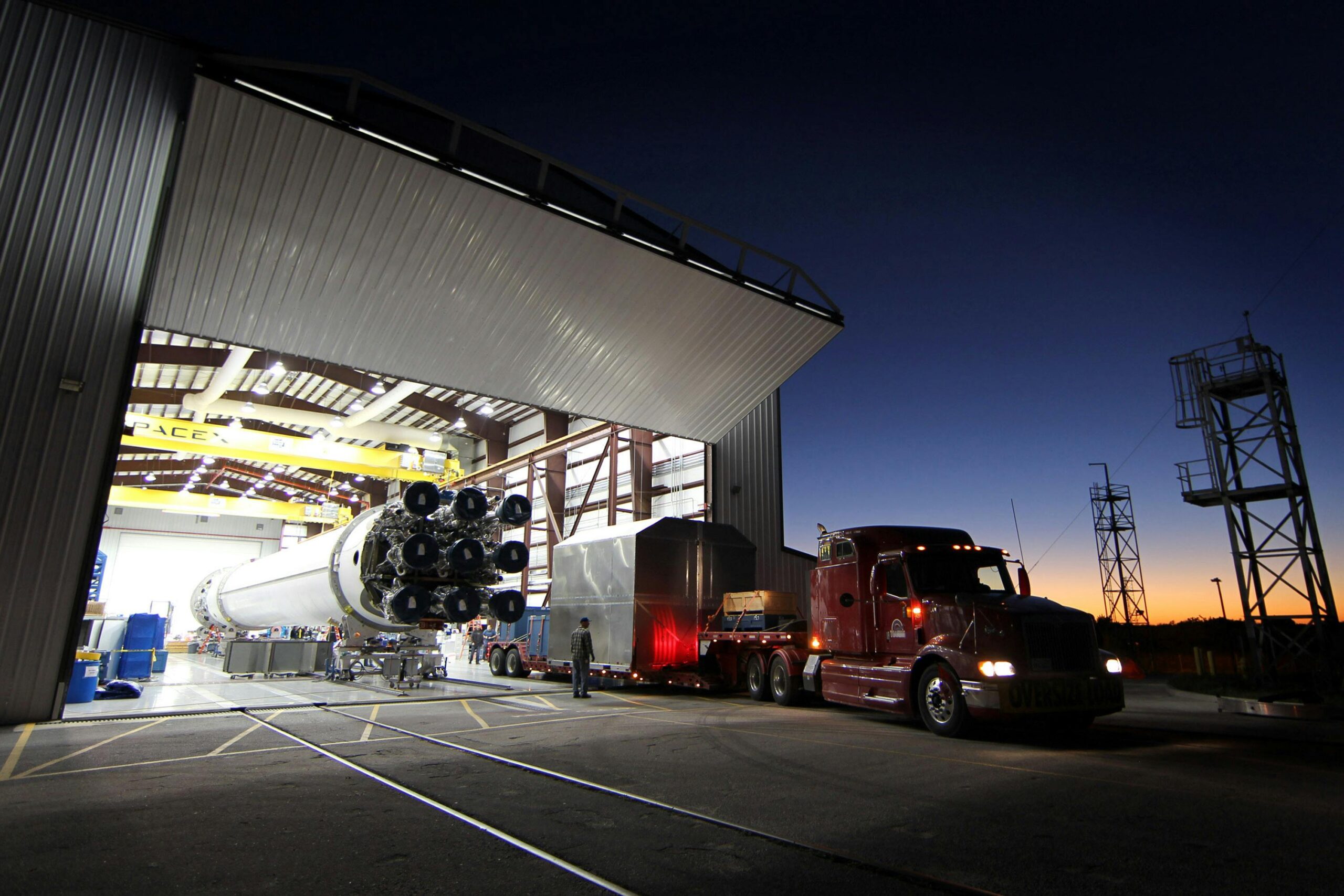
Autonomous cargo spacecraft are revolutionizing how materials reach orbital destinations and beyond. These unmanned vehicles eliminate human risk during routine supply missions while offering greater flexibility in scheduling and operations. Companies like SpaceX with their Dragon cargo capsule and Northrop Grumman with the Cygnus spacecraft have proven the viability of automated resupply missions to the ISS.
Next-generation autonomous systems incorporate artificial intelligence for navigation, docking, and cargo management. These intelligent vehicles can adjust trajectories based on real-time conditions, optimize fuel consumption through advanced algorithms, and even conduct self-diagnostics to prevent failures before they occur. The result is a more resilient supply chain less dependent on constant ground control intervention.
The development of standardized docking interfaces represents another critical innovation. Universal berthing mechanisms allow different cargo vehicles from various manufacturers to interface with multiple space stations and habitats, creating interoperability that mirrors containerization’s impact on terrestrial shipping. This standardization accelerates the development of a true space logistics ecosystem.
Refueling Depots and Orbital Infrastructure
Perhaps the most transformative concept in space logistics involves establishing orbital refueling stations and cargo hubs. These facilities would function as cosmic truck stops, allowing spacecraft to refuel, transfer cargo, and conduct maintenance without returning to Earth. Such infrastructure dramatically extends mission range and reduces the fuel mass required at launch.
Several organizations are developing cryogenic fuel storage and transfer technologies essential for these depots. The ability to store and handle liquid hydrogen, methane, and oxygen in the harsh space environment for extended periods presents significant engineering challenges. Solutions include advanced insulation systems, zero-boil-off technologies, and robotic refueling mechanisms that operate autonomously.
Orbital depots also enable cargo aggregation strategies where multiple smaller launches can accumulate payloads at a staging point before dispatching them together on long-duration missions. This approach optimizes launch schedules and reduces the need for massive single-launch vehicles, providing greater flexibility and redundancy in the supply chain.
In-Situ Resource Utilization: Manufacturing What We Need Where We Need It 🏭
The most revolutionary approach to space logistics involves minimizing what must be transported from Earth by manufacturing materials and components in space. In-situ resource utilization (ISRU) transforms local materials—lunar regolith, Martian soil, asteroid minerals, or even space debris—into usable products, dramatically reducing dependence on Earth-based supply chains.
Lunar regolith can be processed to extract oxygen for life support and rocket propellant, while also providing raw materials for 3D-printed construction components. Mars offers carbon dioxide-rich atmosphere that can be converted into methane fuel and oxygen through Sabatier reactions. These capabilities transform distant locations from destinations requiring constant resupply into self-sufficient outposts.
Water ice deposits discovered on the Moon and Mars represent particularly valuable resources. Water can be electrolyzed into hydrogen and oxygen for propellant, consumed directly by crew members, or used as radiation shielding. The presence of accessible water fundamentally alters the economics of space exploration by eliminating the need to transport one of the heaviest and most essential resources from Earth.
Additive Manufacturing and Space Fabrication
Three-dimensional printing technologies adapted for space environments are transforming logistics by enabling on-demand manufacturing of tools, spare parts, and structural components. Rather than carrying every possible spare part or predicting every need, future missions can transmit digital designs and fabricate items as required using local or recycled materials.
The Made In Space company successfully demonstrated additive manufacturing aboard the ISS, producing tools and components that would have otherwise required dedicated resupply missions. Scaling these capabilities for lunar and Martian operations promises to revolutionize how we support long-duration missions, reducing cargo mass requirements by up to 30% according to some estimates.
Advanced fabrication techniques under development include metal printing in vacuum conditions, regolith-based concrete for construction, and even biological manufacturing systems that use microorganisms to produce materials, pharmaceuticals, and food products. These technologies collectively enable a paradigm shift from logistics centered on transportation to logistics centered on local production.
Cargo Delivery Systems for Planetary Surfaces
Reaching orbit is only half the logistics challenge; delivering cargo safely to planetary surfaces requires specialized systems adapted to different gravitational and atmospheric conditions. The Moon’s airless environment demands precision propulsive landing, while Mars’s thin atmosphere allows for hybrid approaches combining parachutes, retropropulsion, and innovative technologies like supersonic retropropulsion.
SpaceX’s Starship represents an ambitious approach to planetary cargo delivery, designed as a fully reusable system capable of landing substantial payloads on both lunar and Martian surfaces. Its vertical landing capability and large cargo volume make it suitable for delivering the infrastructure components necessary for establishing permanent bases.
For smaller, more frequent deliveries, concepts like cargo landers and surface hoppers offer flexibility. These vehicles can transport materials between surface locations, enabling distributed operations across multiple sites without requiring each location to have its own direct Earth connection. This capability becomes particularly valuable for resource extraction operations that may span considerable distances.
Aerial and Robotic Distribution Networks
On worlds with atmospheres like Mars and Titan, aerial delivery vehicles offer unique advantages for cargo distribution. Drone-like aircraft can cover distances quickly while avoiding surface obstacles, delivering time-sensitive materials or conducting reconnaissance for ground operations. NASA’s Ingenuity helicopter on Mars demonstrated the viability of powered flight on another world, paving the way for larger cargo-carrying aircraft.
Robotic ground vehicles form another essential component of planetary logistics networks. Autonomous rovers can transport cargo across challenging terrain, establish supply caches along exploration routes, and provide mobile storage for materials awaiting processing. Advanced systems under development feature swarm coordination, where multiple robots work collectively to transport large or complex cargo loads.
Revolutionizing Package Design and Cargo Containerization 📦
The physical design of cargo containers and packages profoundly impacts logistics efficiency. Space-optimized containers must maximize volume utilization while providing protection from radiation, temperature extremes, micrometeorites, and acceleration forces during launch and landing. Innovative designs incorporate deployable structures that expand after delivery, dramatically increasing transported volume relative to launch mass.
Inflatable habitat modules pioneered by companies like Bigelow Aerospace exemplify this approach. These structures launch in compact configurations but expand to many times their transit volume once deployed, providing living space, storage capacity, or workshop areas with far greater efficiency than rigid structures.
Smart packaging systems embedded with sensors provide real-time monitoring of cargo conditions throughout the logistics chain. These systems track location, temperature, pressure, and even the structural integrity of contents, allowing logistics managers to identify problems immediately and adjust operations accordingly. Such visibility becomes crucial for long-duration missions where cargo may spend months in transit.
Data Networks and Logistics Management Systems
Effective space logistics requires robust communication networks and sophisticated management software that can coordinate activities across vast distances with significant time delays. Earth-Mars communications face delays up to 22 minutes each way, making real-time coordination impossible and necessitating autonomous decision-making systems.
Blockchain technologies are being explored for tracking cargo and verifying transactions in multi-organizational space operations. Distributed ledger systems provide tamper-proof records of cargo movements, ownership transfers, and service completions without requiring centralized authority—valuable when commercial entities, international partners, and governmental agencies all participate in shared logistics infrastructure.
Machine learning algorithms optimize logistics planning by analyzing historical data, predicting maintenance needs, and identifying efficiency improvements. These systems can simulate thousands of mission scenarios to identify optimal routing, loading configurations, and timing strategies that human planners might overlook. As space operations scale up, such computational assistance becomes essential for managing complexity.
Commercial Space Logistics: The Emerging Industry
The transition from government-only space operations to commercial participation is perhaps the most significant factor enabling logistics innovation. Companies like SpaceX, Blue Origin, Rocket Lab, and numerous others are developing services treating space cargo transportation as a business rather than a singular achievement, driving down costs through competition and innovation.
This commercialization creates opportunities for specialized logistics providers focused on particular niches—last-mile delivery to lunar surfaces, orbital transfer services, cargo insurance, or supply chain management software. The ecosystem diversification mirrors the development of terrestrial logistics, where specialized companies handle different aspects of moving goods from origin to destination.
Investment in space logistics infrastructure is accelerating as commercial viability becomes clearer. Satellite servicing missions that refuel, repair, or reposition orbital assets demonstrate business models beyond traditional launch services. Asteroid mining ventures, though still developmental, promise to fundamentally alter resource logistics by providing materials already in space rather than lifting them from Earth’s gravity well.
Regulatory Frameworks and International Cooperation
As space logistics expands, regulatory frameworks must evolve to address jurisdictional questions, safety standards, and resource rights. International cooperation agreements like the Artemis Accords attempt to establish principles for peaceful and transparent space exploration, including provisions relevant to logistics operations and resource utilization.
Standardization bodies are developing protocols for docking interfaces, communication systems, and cargo handling procedures to ensure interoperability across different nations’ and companies’ systems. These standards facilitate the collaborative infrastructure necessary for sustained space operations, much as international shipping standards enable global terrestrial commerce.
Environmental Considerations and Sustainable Space Operations ♻️
As space activity intensifies, sustainability concerns extend beyond Earth. Space debris already poses significant risks to satellites and crewed vehicles, with logistics operations potentially contributing to the problem through discarded packaging, spent stages, and failed systems. Designing for sustainability requires planning for end-of-life disposal or recycling from the initial mission concept.
Innovative approaches include designing cargo containers for reuse or repurposing. A spent cargo vehicle might become additional habitat space, radiation shielding, or raw material for fabrication rather than space junk. Some concepts envision cargo containers deliberately designed as modular components that assemble into larger structures after delivering their contents.
Orbital debris remediation technologies under development could also serve logistics functions, capturing defunct satellites or debris for materials recycling. This circular economy approach treats space as a closed-loop system rather than an infinite frontier where waste can be ignored, establishing sustainable practices as space operations scale.
Future Horizons: What Comes Next in Space Logistics
Looking forward, space logistics will likely incorporate technologies that seem extraordinary today but will become routine in coming decades. Electromagnetic launch systems like mass drivers could propel cargo from lunar surfaces without requiring chemical propellants. Space elevators, though requiring materials science breakthroughs, could revolutionize Earth-to-orbit transport by eliminating the need for rockets entirely.
Interplanetary transport networks might employ gravity assist trajectories and cycler orbits—spacecraft that perpetually travel between planets, allowing cargo and passengers to transfer during close approaches without the cycler itself entering orbit. Such systems maximize efficiency for regular traffic between established destinations.
Ultimately, truly transformative space logistics will enable human civilization’s expansion beyond Earth not through heroic one-off missions but through mundane, reliable infrastructure that makes space operations as routine as terrestrial shipping. The revolution in space logistics is about transforming space from an exotic destination into an accessible operating environment where humanity can build, explore, and thrive.
The challenges are immense, spanning technology, economics, policy, and international cooperation. Yet the progress already achieved demonstrates that these obstacles are surmountable. As innovative companies, space agencies, and research institutions collaborate on advancing cargo systems, the infrastructure supporting humanity’s space-faring future takes shape—one autonomous vehicle, one orbital depot, one 3D-printed tool at a time. The final frontier is being revolutionized not through dramatic breakthroughs alone, but through the systematic development of the logistics systems that will sustain our presence among the stars.