
Humanity has long gazed at the stars with wonder, dreaming of a day when living beyond Earth becomes reality. That future is no longer science fiction—it’s taking shape right now.

The concept of orbital hotels and space habitats represents one of the most exciting frontiers in human exploration and commercial development. As private space companies continue to advance rocket technology and reduce launch costs, the dream of vacationing among the stars or establishing permanent homes in orbit is transitioning from fantasy to feasibility. This revolutionary shift promises to transform not just how we travel, but how we understand our place in the cosmos.
🚀 The Dawn of Space Tourism and Orbital Living
The commercial space industry has experienced explosive growth over the past decade. Companies like SpaceX, Blue Origin, and Virgin Galactic have successfully launched civilians into space, proving that space travel isn’t exclusively reserved for government astronauts. These pioneering missions have laid the groundwork for more ambitious projects: permanent structures orbiting Earth where people can live, work, and vacation.
The economics of space travel have fundamentally changed. Reusable rocket technology has slashed launch costs from tens of thousands of dollars per kilogram to a few thousand, making ambitious construction projects in orbit financially viable. This cost reduction is the key that unlocks the door to space hotels and habitats.
Several companies are now racing to build the first commercial space stations. These aren’t just tourist destinations—they’re testbeds for technologies that will enable humanity’s expansion throughout the solar system. From artificial gravity systems to closed-loop life support, innovations developed for orbital hotels will pave the way for missions to the Moon, Mars, and beyond.
Architectural Marvels: Designing Hotels for Zero Gravity
Designing accommodations for space presents challenges that terrestrial architects never face. Without gravity, traditional concepts of “up” and “down” become meaningless. Space hotel architects must rethink everything from room layout to plumbing systems.
The leading designs incorporate rotating sections to create artificial gravity through centrifugal force. This approach allows guests to experience something resembling normal gravity in sleeping and dining areas while maintaining zero-gravity zones for recreational activities. Imagine eating breakfast with your feet on the floor, then floating to an observation deck to watch Earth rotate below.
The Window to Infinity 🌍
One feature that all proposed space hotels share is extraordinary viewing opportunities. Large observation windows or transparent domes will offer unobstructed views of Earth, the stars, and passing celestial objects. These windows require advanced materials—multilayered composites that can withstand micrometeorite impacts, radiation, and extreme temperature variations while remaining optically clear.
The psychological impact of seeing Earth from space, known as the “overview effect,” has profoundly affected every astronaut who has experienced it. Space hotel guests will have sustained access to this perspective-altering view, potentially returning to Earth with a renewed appreciation for our planet’s fragility and beauty.
The Guest Experience: What to Expect During Your Orbital Stay
Planning a vacation in space differs dramatically from booking a beach resort. Guests must undergo medical screenings and training before launch. The journey to orbit, while becoming routine, still involves experiencing forces several times normal gravity during ascent—an intense but brief experience.
Once aboard the orbital hotel, daily life combines the extraordinary with the surprisingly mundane. Guests will need to learn to move in microgravity, use specially designed toilets, and adjust sleep schedules to account for experiencing 16 sunrises and sunsets per day as the station orbits Earth every 90 minutes.
Amenities Beyond Atmosphere ✨
Early space hotels will likely offer these features:
- Private sleeping pods with personal viewing ports
- Zero-gravity recreation areas for floating, acrobatics, and games
- Observation lounges with panoramic Earth views
- Specially prepared gourmet meals adapted for microgravity consumption
- Exercise facilities essential for maintaining muscle and bone health
- Virtual reality experiences enhanced by actual weightlessness
- Scientific experiment opportunities for citizen scientists
The cuisine in space has evolved dramatically from the freeze-dried packets of early space missions. Today’s space food includes fresh ingredients delivered on resupply missions, and chefs are developing techniques for preparing restaurant-quality meals in microgravity. Future space hotels may feature Michelin-starred dining experiences with views no earthbound restaurant could match.
The Price of Admission: Economics of Space Hospitality
Early space hotel stays will command premium prices. Initial estimates suggest week-long orbital vacations could cost between $5 million and $10 million per person. This positions space tourism as an ultra-luxury experience accessible only to the wealthy—at least initially.
However, history suggests these costs will decline. Air travel followed a similar trajectory, beginning as an expensive luxury before becoming affordable for middle-class travelers. As launch frequency increases and infrastructure improves, economies of scale should gradually reduce space hotel prices.
Investment Opportunities in Orbital Real Estate
Beyond tourism, space habitats represent potential investment opportunities. Companies are exploring concepts for orbital manufacturing facilities, research laboratories, and even retirement communities in space. The unique environment of microgravity enables manufacturing processes impossible on Earth, from perfect crystals for semiconductors to revolutionary pharmaceuticals.
Some visionaries propose permanent orbital settlements housing thousands of residents. These space habitats would function as independent communities with their own economies, governance structures, and cultures—essentially becoming humanity’s first off-world nations.
Technical Challenges: Engineering Safe Havens in the Void
Building and maintaining structures in space presents formidable engineering challenges. Space is an unforgiving environment characterized by extreme temperature swings, hard vacuum, intense radiation, and the constant threat of micrometeorite impacts.
Life support systems must be extraordinarily reliable. On Earth, a building’s HVAC failure is an inconvenience; in space, it’s potentially fatal. Orbital habitats require redundant systems for oxygen generation, carbon dioxide removal, temperature control, and water recycling. These systems must function flawlessly for years with minimal maintenance.
The Radiation Problem ☢️
One of the most serious challenges for long-duration space habitation is radiation exposure. Earth’s magnetic field and atmosphere protect us from cosmic rays and solar radiation. In orbit, particularly in higher orbits above the protective Van Allen belts, this shielding disappears.
Space habitat designers are developing multiple solutions: strategic water placement within walls to absorb radiation, electromagnetic shielding systems, and advanced materials that block harmful particles. Some designs propose positioning sleeping quarters within the most protected interior sections of the station, minimizing exposure during vulnerable rest periods.
Competing Visions: Who’s Building What
Several companies and organizations are actively developing orbital hotel concepts, each with distinct approaches and timelines.
Orbital Assembly Corporation is developing Voyager Station, a rotating wheel-shaped structure designed to accommodate 400 guests. The rotating design would create artificial gravity equivalent to about one-sixth Earth’s gravity—similar to the Moon. The company aims to begin construction in the coming years.
Axiom Space is taking a different approach, building commercial modules that will initially attach to the International Space Station before eventually detaching to form an independent commercial station. This incremental strategy reduces risk and allows earlier revenue generation.
Blue Origin’s “Orbital Reef” project, developed in partnership with Sierra Space and other companies, envisions a mixed-use space station supporting tourism, research, and manufacturing. The design emphasizes large interior volumes and extensive viewing areas.
International Collaboration and Competition
Space hotel development isn’t limited to American companies. Russia, China, and several private international consortiums have announced plans for orbital tourism facilities. This global interest ensures that even if individual projects face delays or cancellations, the overall trajectory toward orbital habitation continues.
The regulatory environment for space hotels remains uncertain. Questions about jurisdiction, safety standards, liability, and environmental protection need resolution as commercial space infrastructure expands. International cooperation will be essential to establish frameworks that enable development while ensuring safety and sustainability.
Life Support and Sustainability: Closing the Loop
Long-term space habitation requires near-perfect recycling. Unlike Earth, where waste disposal often means moving it elsewhere, space stations must recycle virtually everything. Water systems must purify and recycle wastewater, including perspiration and urine, achieving recovery rates exceeding 90%.
Oxygen generation typically relies on electrolysis, splitting water molecules into hydrogen and oxygen. The oxygen is breathed while hydrogen is either vented or combined with exhaled carbon dioxide to produce water and methane, which can be further processed or stored.
Growing Food Among the Stars 🌱
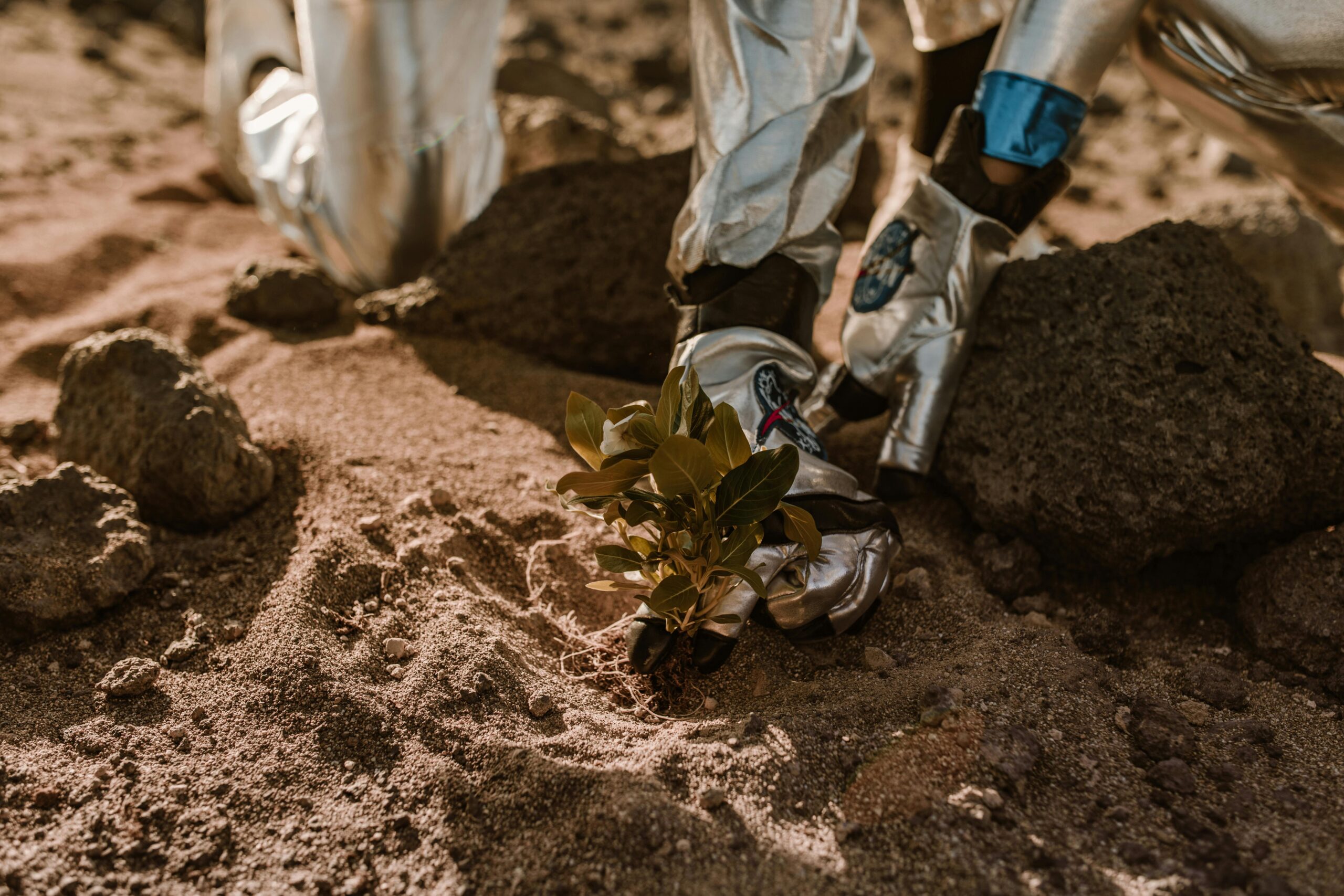
Future space habitats may incorporate hydroponic or aeroponic gardens, growing fresh vegetables to supplement supplied food. These gardens provide nutritional and psychological benefits—caring for plants and eating fresh food can significantly improve mental health during extended space stays.
Research aboard the International Space Station has successfully grown lettuce, radishes, peppers, and other crops in microgravity. Scaling these experiments to production levels capable of feeding space hotel guests represents an important step toward self-sufficient orbital communities.
The Human Element: Psychology and Society in Orbit
Living in space affects human psychology in unexpected ways. The isolation, confinement, and constant awareness of being surrounded by vacuum create unique stressors. Space hotel operators must carefully consider these factors in habitat design and operational procedures.
Interior design plays a crucial role in psychological well-being. Colors, lighting, textures, and spatial arrangements all influence mood and comfort. Designers incorporate natural elements, adjustable lighting that mimics day-night cycles, and spaces that provide both social interaction and privacy.
Building Communities Beyond Earth
As stays in space extend from days to weeks to months, social dynamics become increasingly important. How will diverse groups of strangers coexist in confined spaces? What cultural norms will emerge in this new environment? These questions have no precedent—space habitats represent entirely new forms of human community.
Early space residents will likely develop distinct cultures, traditions, and perhaps even languages influenced by their unique environment. These cultural developments could be among the most fascinating aspects of humanity’s expansion into space.
Medical Considerations and Health Monitoring
Space travel affects the human body in numerous ways. Microgravity causes bone density loss, muscle atrophy, fluid redistribution, and changes to the cardiovascular system. Space hotels must incorporate countermeasures including regular exercise, possibly pharmaceutical interventions, and continuous health monitoring.
Advanced telemedicine systems will connect space hotel guests with Earth-based medical specialists. Automated diagnostic equipment and potentially robotic surgical systems may handle medical emergencies that cannot wait for evacuation to Earth.
Interestingly, some medical conditions might actually benefit from microgravity. Research suggests that certain surgeries, wound healing processes, and rehabilitation therapies could be enhanced in space. Future orbital facilities might include specialized medical centers offering treatments impossible on Earth.
Environmental Impact: Sustainable Space Development
As we extend human presence into orbit, we must avoid replicating Earth’s environmental mistakes. Space debris already poses significant risks to satellites and spacecraft. Responsible space development requires tracking every component, planning for end-of-life disposal, and designing systems that minimize debris generation.
Energy production in space typically relies on solar panels, making it inherently renewable. The challenge lies in manufacturing, transporting, and constructing facilities with minimal environmental footprint both on Earth and in orbit. Some proposals suggest mining asteroids for construction materials rather than launching everything from Earth—a strategy that could dramatically reduce environmental impact while enabling larger-scale construction.
🌟 The Gateway to Deeper Space
Orbital hotels and habitats represent more than tourist destinations—they’re stepping stones to humanity’s expansion throughout the solar system. The technologies, experience, and infrastructure developed for Earth orbit will directly enable lunar bases, Mars colonies, and eventually interstellar voyages.
Space habitats serve as test environments for closed-loop life support systems, long-duration human spaceflight, and large-scale construction techniques. Lessons learned from hosting tourists in orbit will inform the design of generation ships that might someday carry humans to other star systems.
The economic infrastructure supporting space tourism—reliable launch services, orbital construction techniques, supply chains—creates foundations for more ambitious projects. As profits from space hotels fund further development, a positive feedback loop accelerates humanity’s movement into space.
Your Reservation Among the Stars
The timeline for space hotel availability remains uncertain, but multiple companies project opening their facilities within the next decade. While initial prices will be astronomical, early adopters will experience something unprecedented—they’ll be pioneers of humanity’s expansion into the cosmos.
For those unable to afford the initial premium prices, virtual reality experiences and ground-based analogs may offer glimpses of orbital life. As the industry matures and prices decline, space vacations could become aspirational goals for middle-class families, much as international travel once was.
The children watching rocket launches today may well book their honeymoons at orbital resorts or retire to low-gravity habitats where their aging bodies feel lighter and more capable. What seems extraordinary today may become ordinary tomorrow.
A New Chapter in Human History
Living among the stars represents more than a technological achievement—it’s a fundamental expansion of human civilization. For the first time in our species’ history, we’re developing the capability to establish permanent presence beyond our birth planet. This transition ranks alongside humanity’s greatest milestones: the development of agriculture, the industrial revolution, and the digital age.
Space hotels are the beginning, not the end. They demonstrate that humans can thrive beyond Earth, that commercial activity can sustain orbital infrastructure, and that space is accessible to non-specialists. Each guest who floats to an observation window and gazes down at Earth becomes an ambassador for humanity’s spacefaring future.
The view from those windows—our blue planet suspended in black infinity—offers a perspective that could unite humanity. Space hotel guests consistently report the overview effect: an overwhelming sense of Earth’s fragility and the arbitrary nature of borders dividing nations. Perhaps the greatest benefit of orbital hotels isn’t economic or technological, but philosophical—helping humanity recognize itself as a single species sharing one precious world.
The future of orbital hotels and space habitats awaits, not in some distant science fiction tomorrow, but in the tangible present of blueprints, investments, and construction schedules. The question is no longer whether humans will live among the stars, but when you’ll book your first reservation beyond the sky.