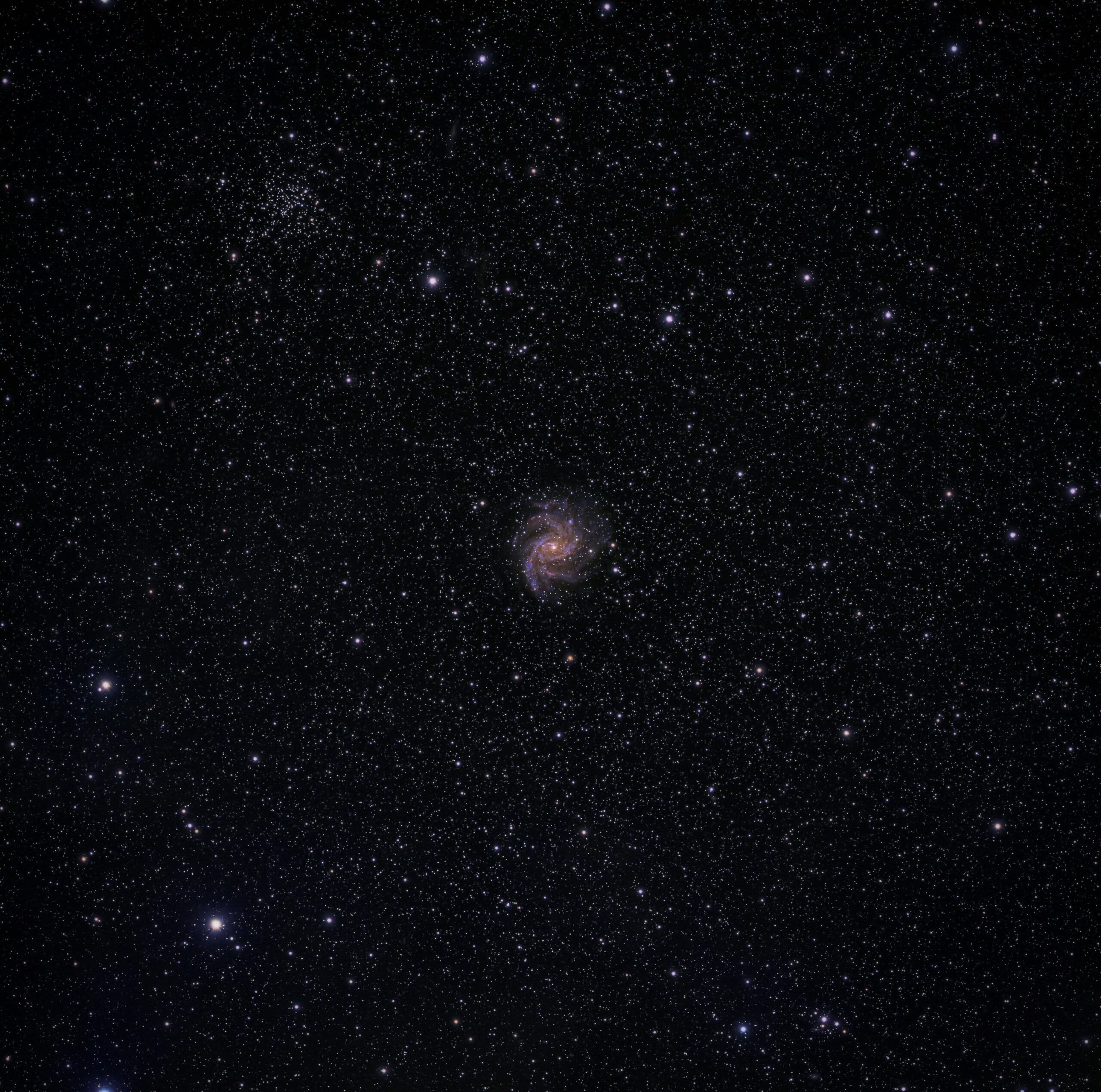
When we gaze upward at the night sky, few celestial phenomena capture our imagination quite like the magnificent rings encircling distant planets in our solar system.

These ethereal bands of cosmic material have puzzled astronomers for centuries, representing one of nature’s most spectacular displays of gravitational choreography. From Saturn’s iconic rings visible through backyard telescopes to the subtle ring systems adorning Jupiter, Uranus, and Neptune, these structures tell profound stories about planetary formation, celestial mechanics, and the dynamic evolution of our cosmic neighborhood. Understanding planetary rings offers invaluable insights into the fundamental processes that shaped our solar system billions of years ago and continue influencing it today.
🪐 The Discovery That Changed Everything
The story of planetary rings begins in 1610 when Galileo Galilei first pointed his primitive telescope toward Saturn. What he observed perplexed him—Saturn appeared to have “ears” or handles extending from its sides. His telescope lacked sufficient resolution to distinguish the true nature of these appendages, leading to considerable confusion among early astronomers.
It wasn’t until 1655 that Dutch astronomer Christiaan Huygens correctly identified these mysterious features as a flat ring surrounding the planet. This groundbreaking observation revolutionized our understanding of celestial mechanics and raised fundamental questions about planetary formation that scientists continue exploring today.
Giovanni Cassini later discovered gaps in Saturn’s rings in 1675, revealing that the ring system consisted of multiple distinct bands rather than a solid structure. The largest gap, now bearing his name as the Cassini Division, demonstrated the complex gravitational interactions shaping these cosmic features.
Anatomy of a Ring System: What Are They Made Of?
Planetary rings consist primarily of countless individual particles ranging from microscopic dust grains to house-sized boulders, all orbiting their host planet in an incredibly thin disk. These particles comprise various materials depending on their origin and the planet they encircle.
The Chemical Composition Spectrum
Saturn’s rings, the most extensively studied ring system, contain predominantly water ice particles with trace amounts of rocky material and organic compounds. This composition gives the rings their brilliant reflectivity, making them visible even through modest telescopes from Earth. The ice particles range from tiny crystalline fragments measuring micrometers across to massive chunks several meters in diameter.
Jupiter’s rings, by contrast, consist mainly of small dust particles likely originating from micrometeorite impacts on the planet’s inner moons. These dark, dust-dominated rings reflect far less sunlight than Saturn’s icy spectacles, requiring spacecraft visits for detailed observation.
Uranus and Neptune possess ring systems composed of darker material, possibly containing significant amounts of organic compounds processed by radiation over billions of years. This composition gives these rings an extremely low albedo, making them challenging to detect and study from Earth.
The Great Ring Formation Debate 🌌
Scientists have proposed several theories explaining how planetary rings form, and evidence suggests multiple formation mechanisms may operate simultaneously or sequentially within the same system.
The Shattered Moon Hypothesis
One compelling theory suggests rings form when a moon ventures too close to its parent planet, crossing the Roche limit—the distance at which tidal forces exceed the gravitational self-attraction holding the moon together. These gravitational stresses literally tear the moon apart, scattering its material into a ring around the planet.
This mechanism may explain some of the denser, more massive ring components, particularly in Saturn’s system where the total ring mass could represent one or more small moons completely disrupted by tidal forces.
Impact Fragmentation Events
Catastrophic collisions between moons or between a moon and a large asteroid can generate enormous debris clouds that settle into ring configurations. This process continues today on smaller scales, with moonlet collisions and micrometeorite impacts constantly supplying fresh material to existing rings.
Jupiter’s rings appear to be continuously replenished through this mechanism, with dust particles knocked off the small moons Metis, Adrastea, Amalthea, and Thebe by high-velocity impacts creating the observable ring structure.
Primordial Material Theory
Some scientists propose that planetary rings may represent primordial material left over from planetary formation that never coalesced into moons. This theory suggests rings could be ancient structures dating back billions of years to the solar system’s birth, preserved in gravitational equilibrium around their host planets.
Saturn’s Majestic Ring System: A Closer Examination
Saturn’s rings represent the crown jewel of planetary ring systems, extending hundreds of thousands of kilometers from the planet while maintaining an average thickness of merely 10 meters—proportionally thinner than a sheet of paper relative to its diameter.
The Ring Hierarchy
Saturn’s ring system comprises seven major divisions designated by letters in order of their discovery rather than their spatial arrangement. From innermost to outermost, the main rings are D, C, B, A, F, G, and E rings, with the B ring being the brightest and most massive.
The Cassini spacecraft, which orbited Saturn from 2004 to 2017, revealed unprecedented detail within these structures. High-resolution images showed that each major ring subdivides into thousands of ringlets, creating a grooved appearance reminiscent of vinyl records.
Shepherd Moons and Gravitational Sculpting
Small moons embedded within or near the rings, called shepherd moons, play crucial roles in maintaining ring structure through gravitational interactions. These moons create gaps, waves, and sharp edges in the ring material, demonstrating the delicate gravitational balance governing ring dynamics.
The F ring, Saturn’s outermost main ring, displays particularly dramatic effects from its shepherd moons Prometheus and Pandora. These moons create a constantly changing structure of knots, braids, and streamers as they gravitationally perturb passing ring particles.
Jupiter’s Subtle Ring System 🔭
Jupiter’s rings went undiscovered until 1979 when Voyager 1 spacecraft images revealed their existence. This late discovery reflects their extremely faint nature—Jupiter’s rings scatter very little light due to their composition of fine dust particles.
The system consists of four main components: the thick inner torus of particles known as the halo ring, the relatively bright main ring, and two wide, faint gossamer rings named after the moons Amalthea and Thebe that supply their material.
Unlike Saturn’s long-lived ice rings, Jupiter’s dust rings are ephemeral on cosmic timescales. Solar radiation and Jupiter’s powerful magnetosphere cause ring particles to gradually spiral into the planet’s atmosphere, requiring constant replenishment from moon impacts to maintain the observable structure.
The Mysterious Rings of the Ice Giants
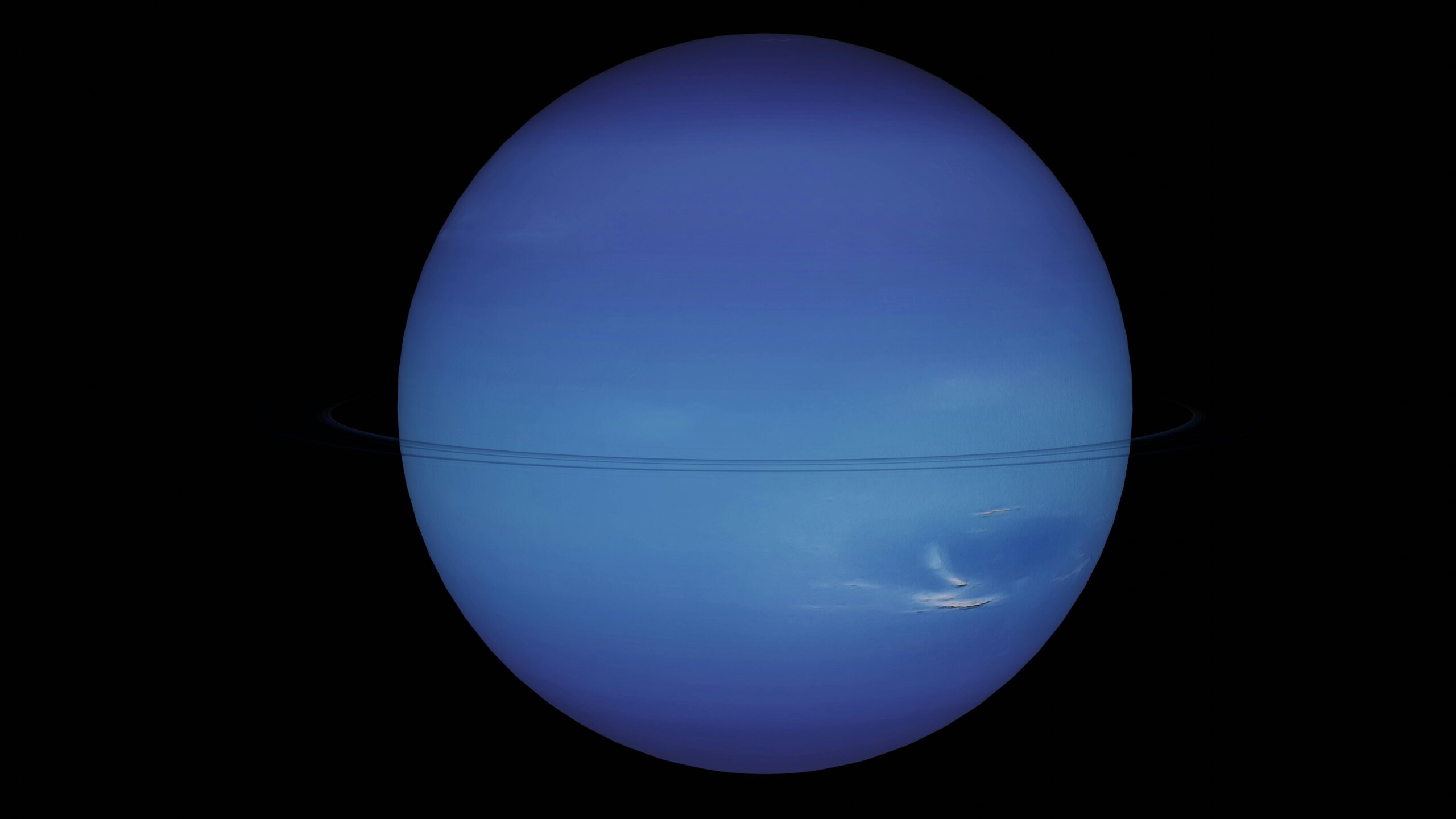
Uranus and Neptune, the solar system’s ice giant planets, both possess dark ring systems that remained unknown until relatively recently due to their extreme faintness and the planets’ vast distances from Earth.
Uranus: Rings in the Darkness
Uranus’s ring system was discovered accidentally in 1977 when astronomers observed the planet passing in front of a star. The star’s light dimmed repeatedly before and after the planet itself blocked it, revealing the presence of multiple narrow rings.
Uranus possesses 13 known rings, with the innermost extending to within 12,000 kilometers of the planet’s cloud tops. These rings are remarkably narrow and dark, composed of material darker than coal with particle sizes generally ranging from centimeters to meters.
Neptune’s Enigmatic Arcs
Neptune’s ring system proved even more puzzling. Ground-based observations in the 1980s produced contradictory results, sometimes detecting rings and sometimes not. The mystery was resolved when Voyager 2 revealed that Neptune’s rings contain dense clumps of material called ring arcs, creating the intermittent detections observed from Earth.
The mechanism maintaining these arc structures against the natural tendency to spread into uniform rings remains debated, though gravitational resonances with Neptune’s moon Galatea likely play a stabilizing role.
Ring Dynamics: The Physics Behind the Beauty ✨
Planetary rings exist in a state of constant dynamical evolution, responding to multiple gravitational and non-gravitational forces that shape their structure over time.
Orbital Resonances and Gap Formation
Gravitational resonances between ring particles and moons create gaps and density variations throughout ring systems. When a ring particle’s orbital period relates to a moon’s orbital period as a ratio of small integers, repeated gravitational tugs from the moon systematically alter the particle’s orbit, often clearing material from specific regions.
The Cassini Division, the prominent gap in Saturn’s rings, results primarily from a 2:1 orbital resonance with the moon Mimas. Particles in this region complete two orbits for every one orbit of Mimas, receiving periodic gravitational kicks that eventually eject them from the gap.
Collisional Processes and Ring Evolution
Ring particles constantly collide with one another at relatively low velocities, typically a few centimeters per second. These collisions dissipate orbital energy, causing rings to thin vertically and spread radially over time, though this spreading is counteracted by various confining mechanisms.
Larger particles can temporarily clump together through gentle collisions, creating ephemeral aggregations called self-gravity wakes that produce subtle textural variations visible in high-resolution spacecraft images.
How Old Are Planetary Rings?
Determining the age of planetary rings represents one of the field’s most contentious questions, with profound implications for understanding solar system history.
Traditional theories assumed Saturn’s rings were ancient structures dating back 4.5 billion years to the solar system’s formation. However, recent data from the Cassini mission challenged this view. Measurements of ring pollution by meteoritic material suggest Saturn’s rings may be surprisingly young, perhaps only 100-400 million years old—meaning they formed during the age of dinosaurs on Earth.
This revised chronology raises fascinating questions about ring formation mechanisms and whether the spectacular rings we observe today represent a temporary phase in Saturn’s evolution. Future Saturn orbiters may find the planet ringless, or sporting an entirely different ring configuration.
Jupiter’s rings are definitely young, continuously regenerated by impacts on inner moons. Without this replenishment, the rings would disappear in mere thousands of years as particles spiral into the planet or escape the system.
Rings Beyond Our Solar System 🌠
While planetary rings were once considered unique to our solar system, recent discoveries have revealed ring systems around distant objects, expanding our understanding of ring formation and stability.
In 2014, astronomers discovered rings around Chariklo, a small object orbiting between Saturn and Uranus classified as a centaur. This unexpected finding demonstrated that ring systems can exist around bodies much smaller than giant planets, requiring revisions to ring stability theories.
Subsequently, rings were detected around the dwarf planet Haumea in the outer solar system and possibly around the centaur Chiron, suggesting ring formation may be more common than previously imagined.
Astronomers have also detected possible evidence of ring systems around extrasolar planets orbiting other stars, though confirming these observations remains challenging with current technology. Future space telescopes may reveal rings to be common features of planetary systems throughout our galaxy.
The Future of Ring Research
Despite centuries of observation and recent spacecraft missions providing unprecedented detail, planetary rings continue revealing surprises and raising new questions. Future exploration will employ increasingly sophisticated technologies to unlock remaining mysteries.
Upcoming Missions and Technologies
NASA and ESA are planning future missions to the outer solar system that will include detailed ring observations. Proposed missions to Uranus or Neptune would provide our first close-up views of those ring systems since Voyager 2’s brief encounters in the 1980s.
Advanced Earth-based telescopes, including the James Webb Space Telescope and upcoming Extremely Large Telescopes, will enable detailed spectroscopic analysis of ring composition and monitoring of temporal changes in ring structure.
Outstanding Questions
Key questions driving future research include: How do rings form and evolve? What determines ring longevity? Can rings form around smaller bodies like asteroids and dwarf planets? Do exoplanets commonly possess ring systems? What can rings tell us about planetary formation processes?
Answering these questions requires combining spacecraft observations, laboratory experiments simulating ring particle collisions, computer simulations modeling ring dynamics, and theoretical work developing mathematical frameworks describing ring behavior.
Why Planetary Rings Matter to Earth 🌍
Studying planetary rings provides insights extending far beyond academic curiosity. Ring research contributes to understanding fundamental physics, planetary formation processes, and even practical challenges facing human space activities.
The collisional dynamics governing ring particle interactions inform our understanding of planet formation, as similar processes occurred in the protoplanetary disk from which Earth and its siblings formed. Ring research thus helps explain our own planet’s origins.
Additionally, the techniques developed for tracking thousands of ring particles translate to monitoring space debris in Earth orbit, an increasingly critical challenge as human space activities expand. The gravitational dynamics controlling ring structure mirror the orbital mechanics governing satellite constellations and space traffic management.
Finally, the sheer beauty and majesty of planetary rings inspire scientific careers and public engagement with astronomy. These cosmic wonders remind us of our place in a vast, dynamic universe filled with phenomena both spectacular and mysterious, awaiting exploration by future generations of scientists and space explorers. The rings continue beckoning us outward, promising discoveries that will reshape our understanding of planetary systems and cosmic evolution for decades to come.