
The era of commercial spaceflight is transforming humanity’s relationship with the cosmos. Private companies are now pioneering infrastructure beyond Earth, creating opportunities that once existed only in science fiction.

As government space agencies collaborate with commercial partners, we’re witnessing an unprecedented expansion of capabilities in orbit and beyond. From modular space stations to lunar supply chains and sophisticated orbital services, the next decade promises to redefine our presence in space. This revolution isn’t just about exploration—it’s about establishing permanent human infrastructure across cislunar space.
🚀 The Dawn of Commercial Space Stations
The International Space Station has served humanity admirably for over two decades, but its operational timeline is finite. As NASA plans for the ISS’s eventual decommissioning, private companies have stepped forward with ambitious proposals for next-generation orbital platforms. These aren’t merely replacements—they represent fundamentally different approaches to living and working in space.
Axiom Space leads the commercial station race with modules already under construction. Their strategy involves initially attaching commercial modules to the existing ISS before eventually detaching to form an independent facility. This approach provides valuable operational experience while the infrastructure matures. The Axiom Station promises larger living quarters, improved research facilities, and dedicated areas for commercial manufacturing.
Blue Origin’s Orbital Reef, developed in partnership with Sierra Space and Boeing, takes a different approach. Designed as a “mixed-use business park” in space, Orbital Reef aims to accommodate up to ten people and provide services ranging from research and manufacturing to media production and tourism. The station’s modular design allows for customization based on client needs, creating unprecedented flexibility in orbital operations.
Architectural Innovation in Microgravity
These new stations incorporate lessons learned from decades of ISS operations. Modern designs prioritize crew comfort with larger windows, improved life support systems, and enhanced radiation protection. The psychological aspects of long-duration spaceflight receive greater attention, with designers creating more homelike environments to reduce the stress of orbital living.
Inflatable habitat technology, pioneered by companies like Sierra Space with their LIFE (Large Integrated Flexible Environment) habitat, offers remarkable advantages. These expandable modules launch in compact configurations but deploy to provide significantly more volume than traditional rigid structures. The fabric layers incorporate advanced materials that provide superior protection against micrometeorites and radiation while weighing considerably less than metal alternatives.
🌙 Lunar Logistics: Building the Supply Chain to the Moon
Establishing sustainable lunar operations requires robust logistics infrastructure—something humanity has never built beyond Earth orbit. The challenges are formidable: extreme temperature variations, abrasive lunar dust, communication delays, and the sheer distance from terrestrial supply chains. Yet multiple companies and space agencies are developing solutions to these challenges.
NASA’s Artemis program provides the framework for sustainable lunar exploration, but commercial partners will handle much of the actual logistics. The Lunar Gateway, a small space station in lunar orbit, serves as a staging point for surface operations. This orbital outpost enables crews to transfer between deep-space transit vehicles and lunar landers while providing a platform for scientific research and communications relay.
Getting Cargo to the Moon
Several companies are developing lunar cargo delivery services under NASA’s Commercial Lunar Payload Services (CLPS) program. These missions will transport scientific instruments, technology demonstrations, and eventually supplies for human missions. Astrobotic’s Peregrine lander, Intuitive Machines’ Nova-C, and other platforms represent the first wave of commercial lunar delivery systems.
The economics of lunar logistics differ dramatically from Earth-based supply chains. Every kilogram sent to the Moon costs thousands of dollars, making efficiency paramount. Companies are developing specialized containers, standardized cargo interfaces, and innovative delivery methods to optimize these costly transfers. Precision landing technologies enable cargo delivery directly to designated surface locations, reducing the need for extensive ground transportation.
In-Situ Resource Utilization: The Game Changer
The most transformative aspect of lunar logistics involves using resources already on the Moon. Water ice in permanently shadowed craters near the lunar poles offers extraordinary value. This ice can provide drinking water, breathable oxygen, and hydrogen for rocket fuel—eliminating the need to transport these critical resources from Earth.
Companies like Masten Space Systems and iSpace are developing technologies to locate, extract, and process lunar resources. Robotic systems will perform the initial prospecting and mining operations, establishing resource depots before human crews arrive. This approach dramatically reduces the cost and complexity of sustained lunar operations.
Lunar regolith, the fine dust covering the Moon’s surface, presents both challenges and opportunities. While its abrasive properties threaten equipment, researchers have demonstrated that it can be processed into construction materials, radiation shielding, and even oxygen. 3D printing technologies adapted for lunar conditions could manufacture habitats, landing pads, and other infrastructure using local materials.
⚙️ The Expanding Market for In-Orbit Services
The growing population of satellites and space stations creates demand for various orbital services. Just as automobiles need maintenance, refueling, and eventual disposal, spacecraft require similar support. The in-orbit services industry addresses these needs, extending satellite lifespans and enabling new operational paradigms.
Satellite Servicing and Life Extension
Northrop Grumman’s Mission Extension Vehicles have already demonstrated satellite life extension by docking with aging communications satellites and providing attitude control and orbit maintenance. These missions prove that robotic spacecraft can rendezvous, dock, and provide services to satellites never designed for such operations—a crucial capability as orbital infrastructure expands.
More advanced servicing missions will offer refueling, component replacement, and orbital transfer services. Companies like Orbit Fab are developing the “gas stations in space” concept, establishing propellant depots in various orbits. Satellites designed with standardized refueling interfaces can extend their operational lives indefinitely, fundamentally changing satellite economics.
Active Debris Removal and Sustainable Orbital Operations
The accumulation of space debris threatens all orbital operations. Defunct satellites, spent rocket stages, and collision fragments create hazards that increase exponentially over time. The Kessler Syndrome—a cascade of collisions generating ever-more debris—represents an existential threat to space activities.
Emerging companies are developing active debris removal capabilities using various technologies. Robotic arms, nets, harpoons, and magnetic systems each offer advantages for capturing different types of debris. Astroscale has conducted demonstrations of debris removal technologies, including rendezvous operations with cooperative and non-cooperative targets.
Sustainable orbital operations require more than debris removal. New satellite designs incorporate features facilitating end-of-life disposal, while operators commit to deorbiting spacecraft within 25 years of mission completion. Future regulations may mandate certain debris mitigation practices, making in-orbit services essential infrastructure rather than optional capabilities.
🛰️ Manufacturing and Research in Microgravity
The unique environment of orbital space stations enables research and manufacturing impossible on Earth. Microgravity allows crystal growth with unprecedented purity, production of specialized pharmaceuticals, and creation of advanced materials with properties unattainable under Earth’s gravity.
Made In Space, now part of Redwire, has already demonstrated manufacturing capabilities aboard the ISS, including 3D printing and fiber optic production. Their experiments prove that certain products manufactured in space possess superior qualities justifying the high cost of orbital production. As launch costs decrease and station capabilities expand, the range of economically viable space-manufactured products will grow substantially.
Pharmaceutical Research Beyond Earth
Protein crystal growth in microgravity produces larger, more regular crystals than terrestrial methods allow. These superior crystals enable more accurate structural analysis, accelerating drug development. Several pharmaceutical companies have conducted experiments aboard the ISS, with some results leading to improved medications now benefiting patients on Earth.
Tissue engineering and organoid research also benefit from microgravity conditions. Three-dimensional cell cultures grow more naturally without gravity-induced settling, creating more accurate models of human organs. These advances could revolutionize drug testing and personalized medicine while providing insights crucial for long-duration space missions.
🔧 Technical Challenges and Solutions
Building infrastructure beyond Earth presents engineering challenges that test the limits of current technology. Radiation exposure, thermal management, power generation, and life support all require innovative solutions operating reliably in the harsh space environment.
Power Systems for Sustained Operations
Solar arrays provide the primary power source for most space systems, but lunar nights lasting two weeks pose challenges for surface operations. Nuclear power systems offer consistent output regardless of sunlight availability, making them attractive for permanent lunar bases. NASA’s Kilopower project has developed compact fission reactors suitable for space applications, while radioisotope systems continue serving deep-space missions.
Energy storage technologies must also advance to support sustained lunar operations. Batteries enabling systems to survive the lunar night must withstand extreme temperature cycling while maintaining high energy density. Fuel cells offer another option, particularly when coupled with in-situ resource utilization producing hydrogen and oxygen propellants.
Life Support and Environmental Control
Closed-loop life support systems become increasingly important for sustained operations far from Earth. The ISS currently recycles about 90% of water-based fluids, but future systems must achieve even higher efficiency. Advanced recycling technologies can process waste products into useful resources, minimizing resupply requirements.
Atmosphere management involves more than oxygen generation and carbon dioxide removal. Trace contaminant control prevents accumulation of harmful chemicals from equipment off-gassing and human metabolism. Pressure management, temperature control, and humidity regulation all require robust systems operating continuously without failure.
💼 The Business Case for Private Space Infrastructure
The expansion of commercial space activities rests on sustainable business models generating returns that justify enormous capital investments. Multiple revenue streams are emerging as space infrastructure matures, from government contracts and research services to manufacturing, tourism, and media production.
Government agencies remain crucial customers, purchasing services rather than owning infrastructure. This arrangement transfers operational costs and technical risks to commercial operators while ensuring government access to space capabilities. NASA’s Commercial Crew Program demonstrated this model’s viability, and similar approaches now extend to space stations, lunar landers, and orbital services.
Space Tourism and Commercial Astronauts
Private orbital visits have already begun, with companies like Space Adventures, SpaceX, and Axiom Space conducting missions carrying private astronauts. As stations designed specifically for commercial operations become available, tourism opportunities will expand dramatically. The experience of viewing Earth from orbit attracts wealthy adventurers willing to pay millions for the privilege.
However, true market expansion requires costs decreasing substantially. Suborbital tourism ventures like Blue Origin’s New Shepard and Virgin Galactic’s SpaceShipTwo offer shorter experiences at lower prices, potentially cultivating demand that eventually extends to orbital visits. As launch costs continue falling and station capacities increase, orbital tourism may become accessible to broader populations.
🌍 International Collaboration and Competition
Space infrastructure development occurs within a complex geopolitical environment balancing cooperation and competition. The Artemis Accords establish principles for peaceful lunar exploration, with numerous nations signing on to this framework. However, China and Russia pursue independent programs, including their joint International Lunar Research Station.
This dynamic creates both challenges and opportunities. Competition drives innovation and accelerates development, while collaboration enables cost-sharing and risk distribution. The optimal approach likely involves both elements—cooperation where beneficial while maintaining competitive pressure that prevents complacency.
Commercial companies operate across national boundaries, creating partnerships that transcend political divisions. European, Japanese, Canadian, and American companies collaborate on various projects, building relationships that strengthen international space cooperation. These commercial ties may prove more durable than government agreements, creating lasting infrastructure for human space activities.
🔮 The Next Decade: What to Expect
The 2020s and 2030s will witness transformation of humanity’s space presence more dramatic than any period since the Apollo era. Multiple commercial space stations will begin operations, lunar surface activities will transition from brief visits to sustained presence, and in-orbit services will mature into routine operations.
Lunar resource utilization will progress from demonstrations to operational systems providing propellant, water, and construction materials. This capability fundamentally changes the economics of cislunar operations, enabling activities impossible when all resources must come from Earth. The Moon transitions from destination to waypoint—a source of materials and a proving ground for technologies eventually extending to Mars.
In-orbit manufacturing will expand from research demonstrations to commercial production of specialized products. Fiber optics, pharmaceuticals, advanced materials, and other high-value items will justify orbital production costs. These operations create permanent jobs in space, establishing humanity as a truly spacefaring species.
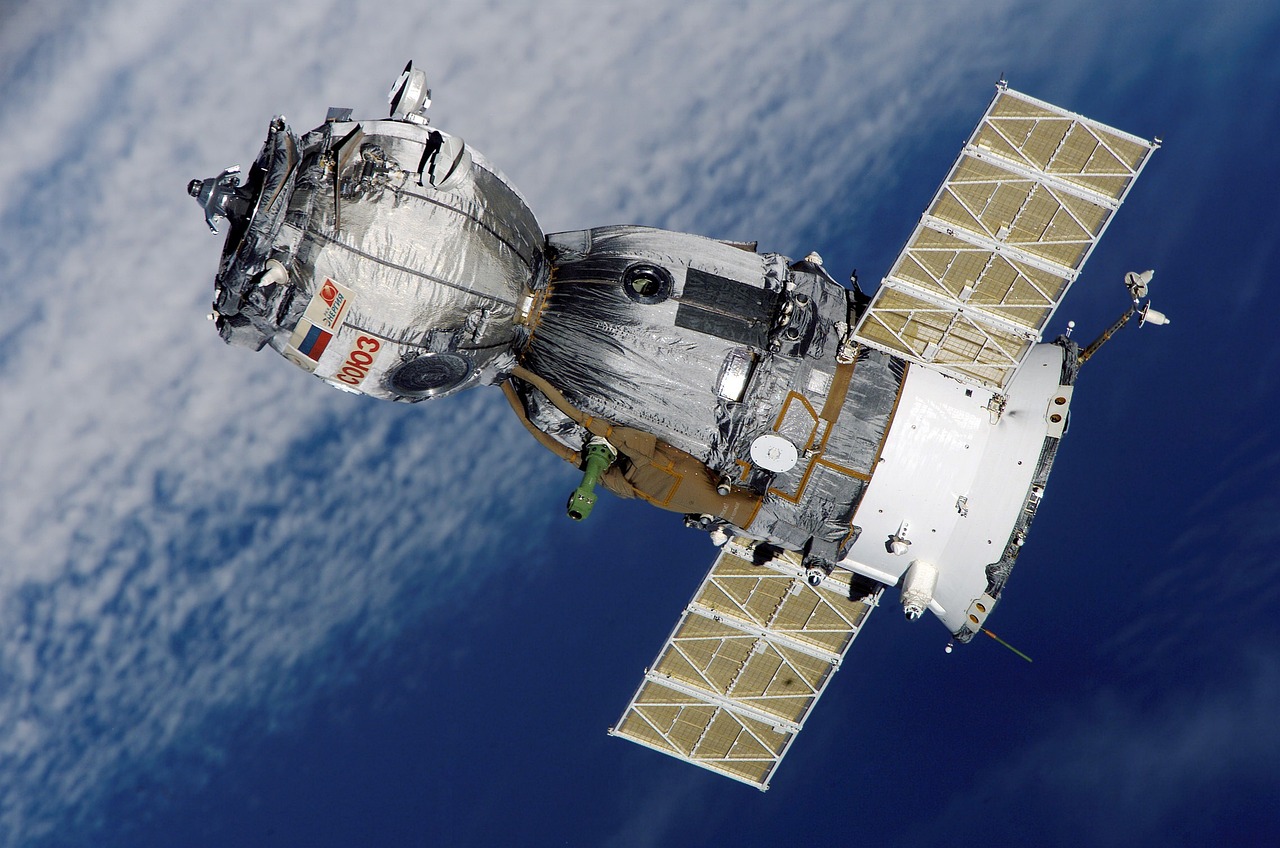
🚀 Building Humanity’s Future Among the Stars
The convergence of private space stations, lunar logistics, and in-orbit services represents more than technological achievement—it marks humanity’s transition from visitor to resident in space. The infrastructure being built today establishes foundations for expanding civilization beyond Earth’s surface.
Challenges remain formidable, requiring continued innovation, substantial investment, and sustained commitment from governments and private sector partners. Technical obstacles must be overcome, business models validated, and regulatory frameworks established. Yet the pieces are falling into place faster than most predicted even a decade ago.
The children born today may live in a world where orbital manufacturing is routine, lunar bases support permanent populations, and travel between Earth and cislunar space occurs regularly. This future isn’t guaranteed—it requires vision, determination, and resources. But for the first time in history, it’s genuinely achievable. The infrastructure being built now will determine whether humanity remains confined to one planet or becomes a multi-world civilization capable of securing its long-term survival and prosperity among the stars.